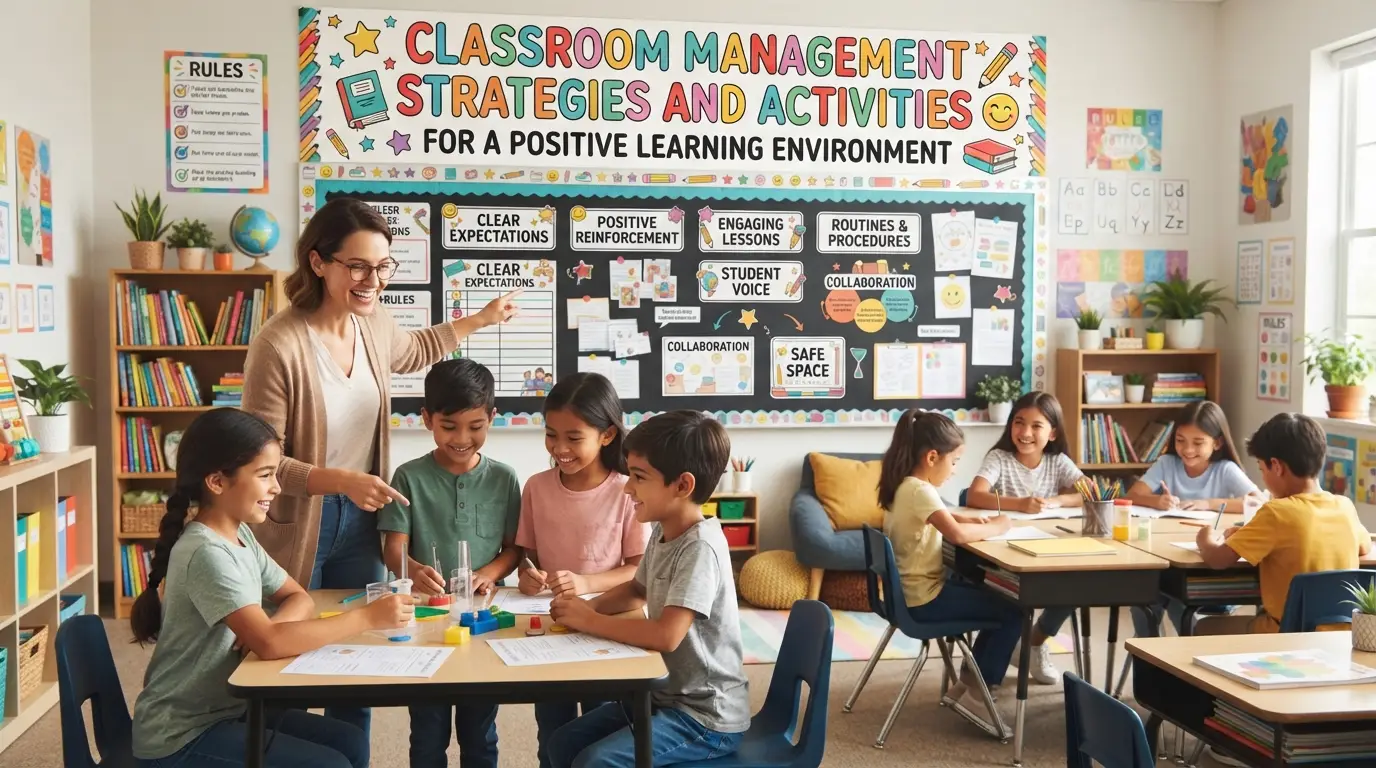
Classroom Management Strategies and Activities for a Positive Learning Environment
Effective classroom management is one of the most important skills a teacher can develop. A well-managed classroom is not simply a quiet room where students follow instructions. It is a learning environment where students understand expectations, feel respected, participate actively, and know how to work with others. Good classroom management helps teachers spend less time correcting disruptive behavior and more time teaching meaningful lessons.
Whether you are a new teacher, an experienced educator, a substitute teacher, or someone preparing to work with children, having practical classroom management strategies can make every school day smoother. The right approach can improve student engagement, encourage positive behavior, strengthen relationships, and create a classroom culture where students feel comfortable learning.
What Is Classroom Management?
Classroom management refers to the strategies, routines, expectations, and teaching practices used to create an organized and productive learning environment. It includes everything from establishing classroom rules and managing transitions to encouraging participation and responding appropriately to challenging behavior.
Successful classroom management is not about controlling every action students take. Instead, it is about creating clear structures that help students understand what is expected of them. When expectations are predictable, students are more likely to feel secure and confident.
Good classroom management also recognizes that every student is different. Some students respond well to verbal encouragement, while others need visual reminders, movement, extra time, or individual support. Effective teachers adjust their approach rather than relying on one classroom management technique for every situation.
Why Classroom Management Matters
Classroom management has a direct impact on the learning experience. When students know the routines and expectations, lessons can begin more efficiently and classroom time can be used productively.
A positive classroom management system can also reduce unnecessary interruptions. Instead of repeatedly stopping a lesson to address the same behavior, teachers can establish routines that students gradually learn to follow independently.
Another important benefit is improved classroom relationships. Students are more likely to cooperate with teachers who are consistent, fair, calm, and respectful. Classroom management therefore involves both structure and connection.
“Create Classroom Expectations Together”
Invite students to help develop a short list of classroom expectations. Ask them what makes a classroom comfortable, respectful, and productive. Turn their ideas into simple expectations such as listening when someone speaks, taking care of classroom materials, respecting personal space, and giving others a chance to participate.
This classroom management activity gives students a sense of ownership. Instead of viewing classroom rules as instructions imposed entirely by an adult, students can understand why the expectations exist.
“Practice Classroom Routines”
Spend time practicing everyday routines instead of assuming students will automatically understand them. Practice entering the classroom, turning in assignments, getting materials, moving into groups, asking questions, and preparing for dismissal.
This activity is particularly useful at the beginning of a school year. Repetition helps students understand exactly what to do, which can reduce confusion and wasted time.
“Use a Classroom Greeting”
Start the day by greeting students at the door. A simple “Good morning” can help establish a positive relationship before the lesson even begins.
Teachers can make the greeting more interactive by allowing students to choose between a wave, fist bump, verbal greeting, or another appropriate option. This small classroom management strategy can help students feel noticed and welcomed.
“Build a Transition Routine”
Transitions can become one of the most challenging parts of a school day. Create a consistent routine for moving from one activity to another. For example, students might have a specific signal that tells them to stop, listen, clean up, and prepare for the next task.
Practice the transition until students can complete it without constant reminders. A predictable transition routine can make classroom management considerably easier.
“Use a Quiet Signal”
Choose a simple signal that tells students it is time to become quiet and pay attention. The signal might be a raised hand, a short phrase, a bell, or a specific sound.
Explain what students should do when they see or hear the signal. The goal is to create a predictable response rather than repeatedly raising your voice over classroom noise.
“Give Specific Praise”
Instead of saying only “Good job,” give students specific feedback about what they did well. You might say, “I noticed how quickly your group organized the materials,” or “Thank you for waiting patiently while your classmate finished speaking.”
Specific praise tells students exactly which behavior should be repeated. It also makes positive reinforcement feel more genuine and meaningful.
“Create a Classroom Jobs System”
Give students simple responsibilities such as distributing materials, organizing books, checking supplies, helping with technology, or keeping shared areas tidy.
Classroom jobs can encourage responsibility and cooperation. They also help students understand that maintaining a positive classroom environment is a shared responsibility rather than something the teacher must handle alone.
“Use Visual Classroom Rules”
Create visual reminders of important classroom expectations. Use simple words, icons, pictures, or short phrases that students can easily understand.
Visual classroom management tools can be especially useful for younger learners and students who benefit from predictable visual information. Place reminders where students can see them during independent work, group activities, and transitions.
“Practice Active Listening”
Teach students what active listening looks and sounds like. Ask them to face the speaker, avoid interrupting, pay attention, and respond appropriately.
Turn this into a short classroom management activity by allowing students to practice listening in pairs. One student speaks for a short period while the other listens and then explains what they heard.
“Use Think-Pair-Share”
Give students a question and allow them to think independently before discussing their ideas with a partner. Afterward, invite selected students to share their thoughts with the class.
This activity provides structure for participation and prevents the same few students from answering every question. It also gives quieter students time to organize their thoughts.
“Create a Calm Corner”
A calm corner can provide students with an appropriate place to pause, breathe, and regain control when they feel overwhelmed. It should not be presented as a punishment area.
Include simple calming resources such as breathing prompts, quiet activities, reflection cards, or visual reminders. Explain when and how students can use the space so it becomes a supportive classroom management tool.
“Use Classroom Check-Ins”
Begin lessons with a brief emotional or readiness check-in. Students might choose a word, symbol, number, or color representing how they feel.
The purpose is not to force students to share private information. Instead, it creates an opportunity for teachers to notice general classroom energy and adjust their approach when necessary.
“Create a Noise-Level Chart”
Different activities require different noise levels. Create a visual chart showing expectations for silent work, partner conversations, group work, and whole-class discussions.
Students can quickly check the expected volume without interrupting the teacher to ask. This simple classroom management strategy can be particularly helpful during collaborative activities.
“Use Movement Breaks”
Students cannot always remain focused while sitting still for long periods. Short movement breaks can help refresh attention and reduce restlessness.
Try simple stretching, standing activities, quick classroom exercises, or movement-based review games. The activity does not need to take a long time to provide a useful change of pace.
“Introduce Classroom Discussion Rules”
Teach students how to participate in respectful discussions. Explain how to disagree politely, ask follow-up questions, listen to different opinions, and avoid interrupting.
Practice these skills through short conversations. Students can learn that classroom discussion is not simply about giving the correct answer; it is also about communicating respectfully.
“Use Group Roles”
Group activities can become disorganized when students do not know what they are responsible for. Give each student a role, such as discussion leader, recorder, materials manager, presenter, or timekeeper.
Rotate roles regularly so students develop different skills. Clear responsibilities can improve cooperation and reduce arguments about who should do what.
“Create an Early-Finisher Routine”
Students who finish assignments early often become distracted while waiting for others. Create a list of meaningful activities they can complete independently.
These might include reading, drawing, reviewing vocabulary, completing a puzzle, writing in a journal, or working on an enrichment task. A clear early-finisher routine helps prevent unnecessary classroom disruptions.
“Use Positive Behavior Reminders”
When students forget an expectation, provide a calm reminder instead of immediately assuming they are deliberately misbehaving. A brief statement such as “Remember our listening expectation” can redirect behavior without turning the situation into a confrontation.
This approach keeps the focus on the behavior and the classroom expectation rather than attacking the student’s character.
“Practice Problem-Solving Conversations”
Teach students how to handle everyday disagreements. Give them scenarios involving sharing materials, group decisions, interruptions, or misunderstandings.
Ask students to identify the problem, explain how each person might feel, suggest possible solutions, and choose a respectful response. These classroom management activities build social and communication skills alongside academic learning.
“Create a Reflection Routine”
When classroom behavior becomes challenging, reflection can help students understand what happened and what they can do differently.
A reflection routine might ask questions such as, “What happened?”, “What were you trying to accomplish?”, “Who was affected?”, and “What could you try next time?” The goal should be learning and accountability rather than humiliation.
“Use Consistent Consequences”
Classroom consequences should be understandable, reasonable, and consistent. Students need to know that expectations apply to everyone.
Consistency does not mean treating every situation identically. Different circumstances may require different responses. The important point is that students understand the connection between behavior, expectations, and consequences.
“Celebrate Improvement”
Classroom management should not focus only on mistakes. Recognize progress when students improve their behavior, participation, organization, cooperation, or independence.
A student who previously struggled with transitions might deserve recognition for completing one smoothly. Celebrating progress encourages students to continue developing positive habits.
“Create a Classroom Compliment Wall”
Provide a space where students and teachers can recognize positive actions. Compliments might mention kindness, helpfulness, perseverance, creativity, cooperation, or responsibility.
Keep the focus on specific behaviors rather than popularity. This can help establish a classroom culture where students notice and appreciate positive contributions.
“Use Classroom Brain Breaks”
Brain breaks can be short activities that refresh students before returning to academic work. Try quick stretches, simple movement challenges, breathing exercises, rhythm activities, or short educational games.
Brain breaks are particularly useful when students appear tired or distracted. They can make classroom management more proactive because they address restlessness before it becomes a larger disruption.
“Teach How to Ask for Help”
Some classroom disruptions happen because students do not know what to do when they are confused. Teach a clear help-seeking routine.
For example, students might reread instructions, check an example, ask a partner, and then raise their hand if they still need assistance. This routine encourages independence and reduces repeated interruptions.
“Create a Materials Routine”
Students should know where classroom materials are stored, when they can access them, and how they should be returned.
Use clearly labeled areas for books, pencils, worksheets, technology, art supplies, and other resources. A well-organized classroom can make daily routines faster and reduce unnecessary movement.
“Use Attention-Grabbing Questions”
Instead of beginning every lesson with instructions, start with an interesting question connected to the topic. Ask students to predict, imagine, compare, or explain something.
An engaging opening can immediately direct attention toward learning. Strong lesson engagement is one of the most effective forms of proactive classroom management.
“Model the Behavior You Expect”
Students learn from what teachers consistently demonstrate. If you expect respectful communication, model respectful communication. If you want students to listen carefully, show them what attentive listening looks like.
Teachers do not need to be perfect. However, consistently modeling patience, organization, fairness, and calm communication reinforces the classroom culture they want students to develop.
“Give Clear Instructions”
Long or complicated instructions can create confusion. Break assignments into manageable steps and check that students understand what they need to do.
For important tasks, ask a student to repeat the directions in their own words. This can reveal misunderstandings before they turn into off-task behavior.
“Use Countdown Transitions”
A countdown can help students prepare for a transition. For example, give students a few minutes to finish an activity, followed by shorter reminders as the transition approaches.
The purpose is not to rush students unnecessarily. It is to provide a predictable signal that one activity is ending and another is beginning.
“Build Relationships With Students”
Strong classroom management begins with relationships. Students are more likely to respond positively when they believe their teacher knows them, respects them, and wants them to succeed.
Learn students’ interests, celebrate their strengths, listen to their concerns, and communicate with them respectfully. Small relationship-building moments can have a significant effect on classroom behavior.
“Use Private Corrections”
Correcting a student publicly can sometimes increase embarrassment or resistance. When possible, use a quiet reminder, proximity, private conversation, or nonverbal signal.
Private corrections allow students to adjust their behavior while preserving their dignity. This can be especially important when dealing with repeated behavior concerns.
“Teach Classroom Independence”
The ultimate goal of classroom management is not for the teacher to control every moment. It is to help students become increasingly independent.
Teach students how to organize their materials, monitor their progress, solve small problems, follow routines, and take responsibility for their choices. Independence creates a classroom that can function more smoothly without constant teacher intervention.
“Review Classroom Expectations Regularly”
Even well-established routines sometimes need refreshing. At the beginning of a new term, after a long break, or when classroom behavior starts changing, revisit important expectations.
Make the review interactive rather than simply reading rules aloud. Ask students why each expectation matters and invite them to demonstrate the correct routine.
“End the Day With a Reflection”
A short end-of-day reflection can help students think about their learning and behavior. Ask questions such as, “What went well today?”, “What did you learn?”, and “What is one thing you want to improve tomorrow?”
This simple routine helps students develop self-awareness and gives teachers useful insight into the classroom environment.
How to Improve Classroom Management Over Time
Classroom management is a skill that develops through observation, practice, and reflection. No strategy works perfectly in every classroom or with every group of students.
Teachers can improve by paying attention to patterns. If students repeatedly become noisy during transitions, the transition routine may need improvement. If students frequently ask the same question, the instructions may need to be clearer. If group activities consistently become difficult, students may need more guidance about collaboration.
The goal is not to eliminate every moment of noise, movement, disagreement, or imperfection. A healthy classroom is active. Students are expected to talk, ask questions, make mistakes, collaborate, and learn.
Effective classroom management provides enough structure for that activity to remain productive.