
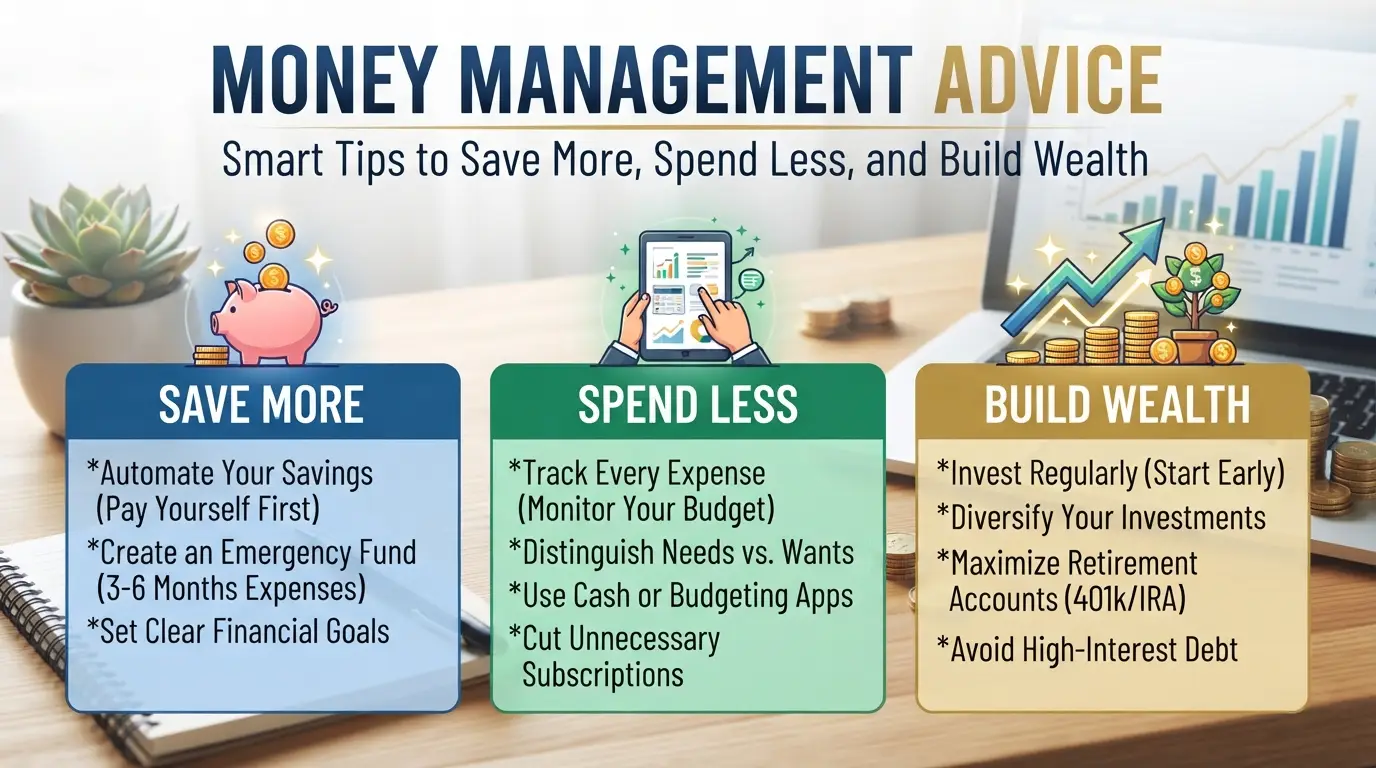
Money Management Advice: Smart Tips to Save More, Spend Less, and Build Wealth
Managing money well is less about how much you earn and more about how intentionally you use what you have. Good money management advice can help you build better financial habits, reduce unnecessary spending, prepare for unexpected expenses, and work toward long-term goals. Whether you are trying to save more, pay off debt, create a budget, or simply understand where your money goes, small changes can make a meaningful difference.
The best money management advice is practical enough to use in everyday life. You do not need to completely change your lifestyle overnight. Instead, focus on creating simple financial routines that you can maintain consistently. From tracking expenses to building an emergency fund, these 129 ideas can help you develop a healthier relationship with money.
Best Money Management Advice for Everyday Life
“Know where your money goes.” One of the simplest pieces of money management advice is to understand exactly how you spend your income. Review your bank statements, bills, subscriptions, groceries, transportation costs, and entertainment expenses regularly. Awareness is the foundation of better financial decisions.
“Create a realistic budget.” A budget should reflect your actual lifestyle rather than an imaginary version of it. List your income, fixed expenses, flexible expenses, savings, and debt payments. Give every major portion of your money a purpose.
“Track your spending.” Recording purchases makes unnecessary spending easier to identify. You can use a spreadsheet, notebook, budgeting app, or banking tool to keep track of daily expenses.
“Separate needs from wants.” Before spending money, ask yourself whether the purchase is necessary or simply desirable. This small pause can prevent many impulse purchases.
“Give yourself spending limits.” Setting a reasonable amount for entertainment, shopping, dining out, and hobbies can make discretionary spending easier to control without eliminating fun.
“Review your finances every week.” A short weekly financial check-in can help you notice overspending before it becomes a larger problem. Use the time to review transactions, upcoming bills, and savings progress.
“Automate important payments.” Automatic bill payments can reduce the risk of missed due dates and late fees. Make sure your account has enough money available before scheduled withdrawals.
“Automate your savings.” Setting up an automatic transfer shortly after payday can make saving feel like a normal financial obligation rather than something you do only when money is left over.
“Use separate accounts for different goals.” Keeping everyday spending, emergency savings, and specific financial goals separate can make your money easier to manage.
“Build a financial routine.” Choose a regular day to review your budget, savings, debt, and upcoming expenses. Consistency often matters more than complexity.
Money Management Advice for Saving More
“Pay yourself first.” Treat savings as one of your priorities instead of waiting to see what remains at the end of the month. Even a modest automatic contribution can become meaningful over time.
“Start with a small savings goal.” If saving a large amount feels overwhelming, begin with a smaller target. Reaching an initial goal can build confidence and encourage you to continue.
“Create an emergency fund.” Unexpected expenses can happen at any time. Building accessible savings for emergencies can reduce the need to rely on credit when something goes wrong.
“Save part of every paycheck.” Consistent saving can be more sustainable than occasionally attempting to save a large amount.
“Use windfalls wisely.” Tax refunds, bonuses, gifts, or other unexpected money can be divided between savings, debt repayment, necessary purchases, and enjoyment.
“Save before shopping.” If you want an expensive item, create a savings goal for it instead of immediately putting the purchase on credit.
“Try a no-spend period.” A short period where you avoid unnecessary purchases can reveal how frequently you spend money out of habit.
“Reduce recurring expenses.” Review subscriptions, memberships, service plans, and other recurring charges. Cancel anything you no longer use.
“Compare prices before major purchases.” Spending a few minutes researching alternatives can help you avoid paying more than necessary.
“Use a waiting period for impulse purchases.” Waiting a day or longer before buying something nonessential can help you determine whether you genuinely want it.
“Keep savings separate from spending money.” When savings are kept in an account intended for long-term goals, you may be less tempted to spend them casually.
“Increase savings when your income rises.” When you receive a raise, consider directing at least part of the additional income toward savings rather than immediately increasing lifestyle expenses.
Money Management Advice for Budgeting
“Budget before the month begins.” Planning ahead gives you a clearer picture of how much money is available for bills, savings, debt, and everyday spending.
“Budget for irregular expenses.” Annual fees, birthdays, school costs, repairs, holidays, and insurance payments can surprise you if they are not included in your financial plan.
“Create sinking funds.” Setting aside smaller amounts regularly for predictable future expenses can make large bills easier to handle.
“Leave room for flexibility.” A budget should not be so strict that one unexpected expense completely destroys it. Include a reasonable miscellaneous category.
“Use realistic grocery limits.” Plan meals, check what you already have at home, and make a shopping list before going to the store.
“Review your budget after major life changes.” A new job, move, marriage, child, loan, or major purchase can change your financial priorities.
“Do not copy someone else’s budget blindly.” Your income, responsibilities, goals, and lifestyle are different from theirs. Build a budget around your own circumstances.
“Budget for enjoyment.” Completely eliminating entertainment can make a financial plan difficult to maintain. Give yourself room for affordable activities you enjoy.
“Check your budget against actual spending.” A budget only becomes useful when you compare your planned expenses with what you really spent.
“Adjust instead of quitting.” If you overspend in one category, learn from it and adjust the next period. One bad month does not have to become a permanent habit.
Money Management Advice for Debt
“Know exactly what you owe.” Make a list of every debt, including the balance, interest rate, minimum payment, and due date.
“Pay bills on time.” Timely payments can help you avoid late fees and, depending on the account, protect your credit history.
“Pay more than the minimum when possible.” Paying additional amounts toward debt can help reduce the balance faster, though you should understand how your lender applies extra payments.
“Prioritize high-interest debt.” High-interest balances can grow quickly, so many people choose to focus additional payments on them while maintaining minimum payments on other debts.
“Stop adding unnecessary debt.” Paying down balances becomes harder if new unnecessary charges continue accumulating.
“Understand your credit card interest.” Knowing how interest and billing cycles work can help you make more informed credit card decisions.
“Keep credit card purchases manageable.” If you regularly spend more than you can comfortably repay, reconsider how you are using the card.
“Consider debt repayment methods.” The debt avalanche method focuses on higher interest rates, while the debt snowball method focuses on smaller balances. Choose a method you can consistently follow.
“Contact creditors when necessary.” If you are struggling to make payments, communicating with creditors early may provide options depending on your situation.
“Do not ignore debt statements.” Avoiding financial problems rarely makes them disappear. Review balances and payment requirements regularly.
“Celebrate debt milestones.” Recognizing progress can help you stay motivated while working toward becoming debt-free.
Money Management Advice for Smart Spending
“Shop with a list.” A written list gives you a clear purpose and can reduce random purchases.
“Check the cost per use.” A more expensive item may sometimes provide better value if you will use it frequently, while a cheap item may not be economical if it quickly needs replacing.
“Think about total cost.” Consider maintenance, accessories, repairs, delivery, and recurring expenses rather than looking only at the purchase price.
“Use what you already own.” Before buying something new, check your cupboards, closet, garage, or storage areas.
“Borrow rarely used items.” Borrowing or renting something you will use only occasionally may be more practical than buying it.
“Learn to distinguish discounts from savings.” A discounted item is not a saving if you did not need or want the item in the first place.
“Compare quality as well as price.” The cheapest option is not always the lowest-cost option over the long term.
“Limit emotional shopping.” Stress, boredom, loneliness, and excitement can influence spending. Give yourself time before making purchases during emotional moments.
“Unsubscribe from unnecessary promotions.” Constant sales emails and notifications can encourage spending.
“Make convenience spending visible.” Delivery fees, frequent takeout, rides, and small purchases can add up. Track them rather than assuming they are insignificant.
Money Management Advice for Financial Goals
“Write down your financial goals.” A specific goal is easier to work toward than a vague desire to become financially successful.
“Give every goal a deadline.” A target date can make your savings plan more concrete.
“Break large goals into smaller milestones.” Saving for a major purchase can feel more achievable when divided into monthly or weekly targets.
“Prioritize your goals.” You may have several financial goals at once. Decide which ones require attention first.
“Measure progress regularly.” Check your savings balances and debt balances periodically so you can see whether your actions are producing progress.
“Keep your goals visible.” A simple note, spreadsheet, or financial tracker can remind you what you are working toward.
“Connect spending with priorities.” Before making a major purchase, consider whether it supports or delays your important financial goals.
“Expect goals to change.” Financial priorities can change as your circumstances change. Review them periodically instead of treating an old plan as permanent.
“Celebrate progress responsibly.” You do not need to spend a lot of money to reward yourself for reaching a financial milestone.
Money Management Advice for Building Better Habits
“Start with one financial habit.” Trying to change everything at once can become overwhelming. Begin with one behavior you can repeat consistently.
“Make saving automatic.” Automation removes the need to remember to save every month.
“Check your accounts regularly.” Frequent awareness can help you catch unusual charges, forgotten subscriptions, and upcoming bills.
“Use reminders for important dates.” Payment deadlines, renewals, taxes, and annual expenses are easier to manage when you plan ahead.
“Keep financial records organized.” Store important statements, receipts, account information, and documents securely.
“Protect your financial information.” Use strong passwords, multi-factor authentication where available, and caution when responding to suspicious messages.
“Review your subscriptions.” Services you signed up for months ago may no longer provide enough value to justify their cost.
“Have regular money conversations.” If you share finances with a partner or family member, discussing goals and expenses can reduce misunderstandings.
“Learn basic financial terms.” Understanding concepts such as interest, inflation, credit utilization, compound growth, and fees can make financial decisions easier to evaluate.
“Question financial advice.” Not every money tip works for every person. Consider your own circumstances before following someone else’s strategy.
Money Management Advice for Increasing Financial Confidence
“Stop comparing your finances with others.” Someone else’s lifestyle does not reveal their income, debt, savings, or financial responsibilities.
“Focus on progress rather than perfection.” Better money management develops over time.
“Learn from financial mistakes.” An unnecessary purchase or poorly planned month can become a useful lesson if you understand what caused it.
“Give yourself realistic expectations.” Building savings and reducing debt can take time.
“Do not let embarrassment prevent action.” Financial problems become easier to address when you face them honestly.
“Learn something about money regularly.” Reading a financial article, reviewing your budget, or learning about a financial concept can gradually improve your knowledge.
“Ask qualified professionals when appropriate.” For complex financial, tax, investment, or legal questions, consider getting advice from an appropriately qualified professional.
“Keep your financial goals personal.” Your version of financial success may involve stability, flexibility, home ownership, travel, retirement, or simply having fewer money worries.
“Use mistakes as information.” Instead of saying you are bad with money, identify the specific behavior that needs to change.
“Build confidence through consistency.” Repeated small actions can create stronger financial habits than occasional bursts of motivation.
Money Management Advice for Long-Term Financial Planning
“Think beyond this month.” Good money management includes both immediate expenses and future needs.
“Prepare for large future expenses.” Cars, education, housing, medical costs, family events, and retirement may require years of planning.
“Understand your workplace benefits.” If your employer provides retirement plans, insurance, or other benefits, learn how they work and what costs or conditions apply.
“Review insurance needs.” Appropriate insurance can help protect your finances from certain large unexpected losses. Your needs depend on your circumstances.
“Consider retirement early.” The earlier you understand your retirement needs, the more time you may have to plan.
“Understand investment risk.” Investments can lose value, and different investments carry different levels of risk. Learn what you are investing in before committing money.
“Do not invest money you cannot afford to lose.” Essential living expenses and emergency savings should be considered separately from money intended for investments.
“Pay attention to fees.” Account, investment, transaction, and service fees can affect your overall financial results.
“Review your financial plan periodically.” Income, expenses, goals, and responsibilities can change, so your plan should evolve with them.
“Think about financial resilience.” A strong financial position is not only about wealth. It is also about your ability to handle setbacks without immediately falling into financial crisis.
Money Management Advice for Families
“Teach children basic money skills.” Simple lessons about saving, spending, earning, and waiting can help children develop healthy financial habits.
“Set family financial goals.” Shared goals can make saving feel like a team effort.
“Plan for family expenses.” School costs, celebrations, transportation, activities, and household repairs should have a place in your financial plan.
“Discuss money openly when appropriate.” Clear conversations about shared expenses can prevent confusion.
“Teach delayed gratification.” Learning to wait for something instead of buying immediately is an important financial skill.
“Model responsible spending.” Children often learn financial behavior by observing adults.
“Create household spending boundaries.” Agreeing on major purchases and shared expenses can make family finances easier to manage.
“Prepare for unexpected family costs.” Emergency savings can provide useful financial flexibility when unexpected situations arise.
Final Money Management Advice to Remember
“Spend intentionally.” Every purchase represents money that cannot be used somewhere else, so spend according to your priorities.
“Save consistently.” You do not need to start with a huge amount. Consistency is the important part.
“Plan before borrowing.” Debt can be useful in some circumstances, but understand the cost and repayment requirements before taking it on.
“Review your financial progress.” What gets reviewed is easier to improve.
“Protect your future self.” Financial decisions today can affect the options available to you later.
“Keep an emergency cushion.” Unexpected expenses are part of life, so preparing for them can make financial setbacks less disruptive.
“Make your money work toward your goals.” Your financial system should support the life you are trying to build.
“Be patient with the process.” Better money management is a long-term habit rather than a quick transformation.
“Choose sustainable habits.” A simple financial routine you can maintain is often more useful than an extreme plan you abandon after a few weeks.
“Keep learning.” Personal finance changes as your income, responsibilities, goals, and circumstances change. Continue improving your financial knowledge.
“Review your priorities before major purchases.” A purchase can be affordable today but still interfere with an important future goal.
“Build financial flexibility.” Keeping some money available for unexpected opportunities and expenses can give you more choices.
“Make decisions based on facts.” Look at your income, expenses, debt, savings, and goals rather than relying only on emotion.
“Use money as a tool.” Money management is ultimately about directing your resources toward the things that matter most to you.
“Start today.” You do not need a perfect financial plan before taking your first step. Tracking one expense, saving a small amount, reviewing one bill, or creating a simple budget can begin the process.
Good money management is built through everyday decisions. The most useful money management advice is not necessarily complicated or dramatic. It is often about knowing where your money goes, spending with intention, saving consistently, managing debt responsibly, preparing for unexpected expenses, and keeping your long-term goals in sight. When these habits become part of your routine, managing money can feel less stressful and more purposeful.
The goal is not to control every penny or eliminate every enjoyable purchase. Instead, effective money management helps you create a balance between enjoying your money today and protecting your financial future. Start with the habits that make the biggest difference for your current situation, improve them gradually, and keep adjusting your approach as your financial life changes.


