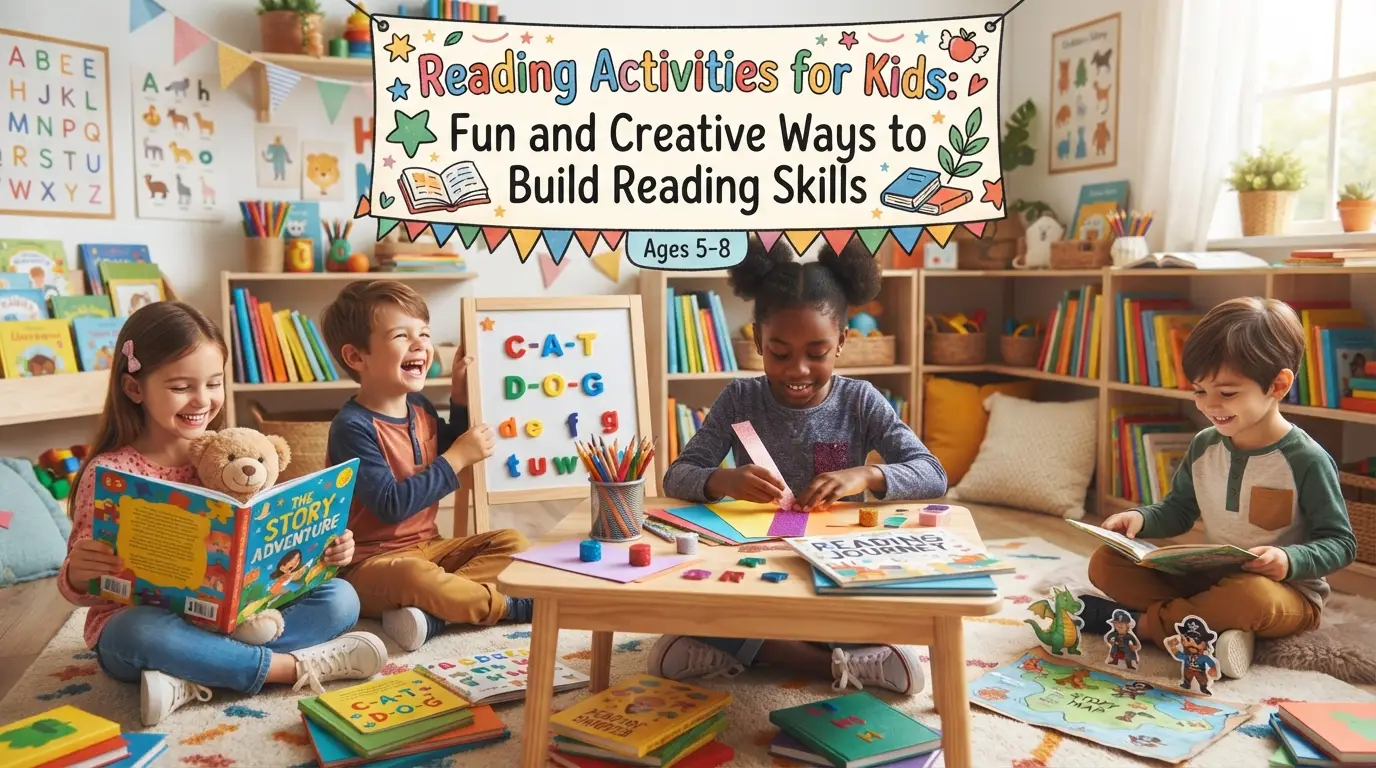
Reading Activities for Kids: Fun and Creative Ways to Build Reading Skills
Reading is one of the most valuable skills children can develop, and the best way to encourage a love of books is to make reading enjoyable. With these 99 reading activities for kids , parents, teachers, and caregivers can turn everyday reading into an exciting adventure filled with creativity, imagination, and discovery. Whether children are learning their first letters, practicing sight words, or exploring chapter books, the right reading activities can help them build confidence and develop stronger literacy skills.
The best reading activities for kids do not have to involve expensive materials or complicated lesson plans. Simple games, storytelling sessions, picture books, reading challenges, and hands-on crafts can make a significant difference. By choosing activities that match a child’s age, interests, and reading level, adults can create positive experiences that encourage children to read more often.
Fun Reading Activities for Kids at Home
Picture Book Exploration
Picture book exploration encourages children to look closely at illustrations before reading the story. Ask your child what they notice, what they think might happen, and how the pictures help explain the story. This reading activity for kids develops observation skills, vocabulary, and prediction abilities while making books more engaging.
Read-Aloud Time
Reading aloud is a wonderful way to introduce children to new words, exciting characters, and different storytelling styles. Choose a favorite book and use expressive voices for each character. Pause at important moments to ask questions and encourage children to share their thoughts. Regular read-aloud sessions also help children understand pronunciation, sentence structure, and reading fluency.
Story Prediction Game
Before turning each page, ask children to predict what will happen next. Encourage them to explain their answers using clues from the illustrations or previous sentences. This activity develops comprehension and critical thinking while helping young readers understand how stories are organized.
Favorite Character Discussion
Invite children to choose their favorite character from a book and explain why they like that character. Ask questions about the character’s personality, actions, feelings, and decisions. This simple reading activity helps children practice speaking, understand character development, and connect emotionally with stories.
Reading in a Cozy Corner
Create a comfortable reading corner with pillows, blankets, soft lighting, and a small collection of age-appropriate books. Let children decorate the space with drawings or handmade bookmarks. Having a special place for reading can help children associate books with relaxation, comfort, and enjoyment.
Family Reading Hour
Set aside a regular time when everyone in the family reads together. Parents can read novels, children can explore picture books, and older siblings can enjoy comics or short stories. A family reading hour demonstrates that reading is a valuable activity for people of all ages.
Book Scavenger Hunt
Create a scavenger hunt that encourages children to search through books for specific objects, characters, colors, or words. Ask them to find a book with a dog, a story featuring a castle, or a page showing someone laughing. This playful activity encourages children to explore books while practicing visual recognition and comprehension.
Read and Draw
After reading a short story, ask children to draw their favorite scene. Encourage them to include characters, settings, and important details from the text. Once the drawing is finished, invite them to explain how it connects to the story. This activity combines reading comprehension with artistic expression.
Bedtime Story Adventure
Make bedtime reading a peaceful family tradition. Let children select a story, predict what might happen, and discuss their favorite parts afterward. Keeping bedtime reading relaxed rather than turning it into a test helps children develop positive associations with books.
Book Basket Discovery
Fill a basket with books about animals, adventures, nature, friendship, and other subjects children enjoy. Allow them to choose a different book whenever they want to read. Rotating the selection every few days keeps the experience fresh and introduces children to different genres.
Creative Reading Activities for Kids
Make a Story Wheel
Create a paper wheel divided into sections containing characters, settings, and story events. Children can spin the wheel and use the selected ideas to read a related story or invent their own. This activity encourages creativity while helping children recognize common elements of storytelling.
Create a Personal Bookmark
Provide colored paper, markers, stickers, and ribbons so children can design their own bookmarks. Ask them to write a favorite word, draw a beloved character, or include a short reading reminder. A personalized bookmark makes reading feel special and encourages children to return to their books.
Turn a Story Into a Comic
Ask children to transform a short story into a comic strip. They can draw important scenes, add speech bubbles, and summarize the events in their own words. This reading activity for kids supports sequencing, summarization, and understanding dialogue.
Build a Story With Blocks
Use building blocks to represent locations, characters, or important objects from a story. After reading, children can recreate a house, bridge, castle, or forest using the blocks. They can then explain how each structure relates to the events in the book.
Create a Story Map
Give children a large sheet of paper and ask them to map out the story’s beginning, middle, and ending. They can include the main characters, setting, problem, and solution. Story mapping makes it easier for young readers to understand how different events connect.
Make a Reading Collage
Collect old magazines, newspapers, printed pictures, and colored paper. Ask children to create a collage representing the main theme of a book. They can include images of characters, places, objects, or emotions. This activity helps children interpret stories visually and express their understanding creatively.
Design a New Book Cover
Invite children to design an alternative cover for a book they have read. Encourage them to create a title, select suitable colors, and draw an image representing the story. Afterward, ask them to explain why their cover matches the book’s theme.
Act Out a Favorite Scene
Choose a memorable scene from a story and encourage children to act it out. They can use household objects as props, assign roles to family members, and repeat important dialogue. Acting out a scene improves reading expression, listening skills, and understanding of characters’ emotions.
Write a Different Ending
After finishing a story, ask children to imagine a different ending. What if the main character made another decision? What if the problem had a surprising solution? This activity encourages children to think deeply about plot development and understand how decisions influence outcomes.
Create a Reading Scrapbook
Help children create a scrapbook featuring books they have enjoyed. They can include drawings, short summaries, favorite quotations, and descriptions of memorable characters. Over time, the scrapbook becomes a personal record of their reading journey and helps them reflect on their progress.
Phonics and Early Reading Activities for Kids
Letter Sound Matching
Prepare cards showing letters and pictures of objects that begin with those letters. Children can match the letter B with a picture of a ball or the letter S with a picture of a sun. This activity strengthens phonemic awareness and helps beginners connect written letters with spoken sounds.
Alphabet Treasure Hunt
Hide letter cards around a room and ask children to find them. Whenever they discover a letter, they can say its name and sound and identify a word beginning with that sound. This playful activity turns alphabet practice into an exciting physical game.
Rhyming Word Game
Say a simple word such as “cat” and ask children to find rhyming words such as “hat,” “bat,” and “mat.” Younger children can use pictures, while older children can write their answers. Rhyming activities help children recognize sound patterns and prepare them for decoding unfamiliar words.
Sight Word Bingo
Create bingo cards featuring common sight words. Call out a word and let children cover the matching space on their cards. The first child to complete a row wins. This activity encourages repeated exposure to familiar words and can make early reading practice more enjoyable.
Build Words With Letter Tiles
Give children magnetic letters, wooden letters, or paper tiles. Say a simple word and ask them to arrange the letters in the correct order. Start with short words such as “dog,” “sun,” and “map” before introducing longer words. This activity develops spelling awareness and decoding skills.
Sound Sorting
Gather pictures of familiar objects and ask children to sort them according to their beginning sounds. For example, pictures of a fish, flower, and fork belong together because they begin with the same sound. Sound sorting encourages children to listen carefully and recognize similarities between words.
Clap the Syllables
Choose familiar words and ask children to clap once for each syllable. For example, “apple” has two syllables, while “banana” has three. This activity helps children hear the rhythm of spoken language and recognize how words can be divided into smaller parts.
Make a Word Wall
Create a small wall display featuring useful words children encounter while reading. Add new words regularly and encourage children to use them in sentences. A word wall makes vocabulary practice visible and provides a helpful reference during reading and writing activities.
Match Words With Pictures
Prepare cards containing simple words and separate cards containing corresponding pictures. Children can match “apple” with an apple picture or “house” with an image of a house. This activity helps beginning readers connect written words with familiar objects.
Read Repetitive Books
Choose books that repeat familiar phrases or sentence patterns. Encourage children to join in whenever they recognize a repeated line. Repetitive reading helps children anticipate language, improve confidence, and practice reading with greater fluency.
Reading Comprehension Activities for Kids
Ask Who, What, Where, and Why
After reading a story, ask children questions about who appeared, what happened, where the story took place, and why the characters acted in certain ways. These questions encourage children to look beyond individual words and understand the meaning of the text.
Retell the Story
Invite children to explain the story in their own words without looking at the book. Encourage them to describe the main events in the correct order. Retelling develops memory, comprehension, sequencing, and oral language skills.
Identify the Main Idea
Choose a short passage and ask children what it is mainly about. Help them distinguish the central message from smaller details. This activity is especially useful for school-aged children who are beginning to read informational texts and longer passages.
Find Clues in the Text
Ask children to locate words or sentences that support their answers. If they believe a character is frightened, encourage them to find clues showing how the character behaves or feels. This activity teaches children to support their interpretations with evidence.
Compare Two Characters
Read a story containing two interesting characters and discuss their similarities and differences. Children can consider their personalities, goals, actions, and relationships. Comparing characters helps readers develop analytical thinking and understand different perspectives.
Predict From the Title
Before opening a book, ask children to examine its title and cover. Encourage them to guess the topic, characters, or possible events. After reading, revisit their predictions and discuss which guesses were accurate and which were surprising.
Sequence Story Cards
Prepare cards showing important events from a familiar story. Mix them up and ask children to arrange them in the correct order. This hands-on reading activity strengthens chronological understanding and helps children recognize how one event leads to another.
Summarize in One Sentence
Challenge children to describe a story using only one sentence. They must identify the most important information without including every small detail. This activity teaches concise communication and helps children distinguish essential information from supporting details.
Discuss the Story’s Message
After reading, talk about the lesson or message the author may be communicating. A story might explore kindness, honesty, teamwork, or perseverance. Encourage children to explain their opinions and connect the message to everyday experiences.
Make Connections While Reading
Ask children whether a story reminds them of something in their own lives, another book, or the world around them. These connections help readers understand unfamiliar situations and make the material more meaningful.
Interactive Reading Games for Kids
Reading Dice Game
Write reading prompts on the sides of a large paper die. Prompts might include naming a character, describing the setting, predicting the ending, or finding a favorite word. Children roll the die after reading and respond to the prompt that appears.
Word Search Challenge
Create a word search using vocabulary from a story. Children search for character names, important objects, or words connected to the theme. This activity reinforces word recognition and encourages children to revisit vocabulary they have encountered.
Reading Charades
Write character names, actions, and objects from familiar books on small pieces of paper. Children take turns acting out a prompt while others guess what it represents. Reading charades connects literature with movement and helps children remember story details.
Mystery Book Guessing
Cover a book’s title and show children only a few clues, such as a short description or a small part of the illustration. Ask them to guess which book it might be. After revealing the book, discuss the clues that helped them make their predictions.
Spin and Read
Create a spinner with categories such as animals, adventures, fairy tales, and funny stories. Children spin it and choose a book from the matching category. This activity introduces variety and gives young readers a playful way to explore different genres.
Reading Relay
In a small group, children take turns reading a sentence or paragraph aloud. Each participant continues from where the previous reader stopped. Keep the activity supportive, allow children to pass when needed, and focus on cooperation rather than speed.
Vocabulary Guessing Game
Select an unfamiliar word from a story and ask children to guess its meaning using surrounding sentences or illustrations. Then explain the word and invite them to create their own example. This activity develops vocabulary and context-clue skills.
Book Character Guess Who
Choose a character from a familiar book and describe their appearance, personality, or actions without revealing their name. Children ask questions and use the clues to identify the character. The game encourages careful listening and recall.
Finish the Sentence
Read a familiar sentence aloud but stop before the final word or phrase. Encourage children to complete it using their knowledge of the story. For beginners, repeated phrases can make this activity easier and more confidence-building.
Reading Treasure Chest
Place small reading-related rewards, such as stickers, bookmarks, or handwritten compliments, in a decorated box. Children can earn an opportunity to choose a reward after completing a reading goal. The focus should remain on effort, curiosity, and enjoyment rather than competition.
Outdoor Reading Activities for Kids
Read Under a Tree
Take a favorite book outdoors and find a comfortable, shaded spot beneath a tree. Children can enjoy the fresh air while exploring stories about animals, nature, or adventure. Changing the reading environment can make an ordinary book feel like a new experience.
Nature Word Hunt
Give children a list of words connected to nature, such as “leaf,” “bird,” “flower,” and “cloud.” Ask them to find objects that match the words and read each word aloud. This activity connects vocabulary development with real-world observation.
Storytelling Picnic
Pack a few books and snacks for a family picnic. Take turns reading short passages, telling stories, or describing imaginary adventures inspired by the surroundings. A storytelling picnic combines social interaction, outdoor enjoyment, and literacy practice.
Read and Walk
Choose a safe walking route and stop occasionally to read short signs, labels, or information boards. Younger children can identify letters and familiar words, while older children can read longer descriptions. This activity shows children that reading is useful beyond books.
Outdoor Alphabet Search
Encourage children to find objects representing different letters of the alphabet. They might find a leaf for L, a rock for R, or a flower for F. After discovering an object, they can write its name or describe it in a sentence.
Sidewalk Storytelling
Use sidewalk chalk to write a story one sentence at a time. Children can add drawings, characters, and new events as the story develops. Reading the finished story aloud helps reinforce sequencing, vocabulary, and creative expression.
Read About Animals
Choose books about birds, insects, pets, or wild animals and read them before visiting a park or observing nature. Ask children to identify animals they recognize and compare real observations with details from the book.
Create a Nature Journal
Encourage children to read a short nature passage and then write or draw something they observe outdoors. They can record weather conditions, describe plants, or note animal behavior. This activity combines informational reading with writing and scientific curiosity.
Read at the Library
Visit a local library and let children explore different shelves, browse picture books, and choose their own reading materials. Library visits also introduce children to community resources and teach them how to discover books independently.
Reading and Writing Activities for Kids
Write a Letter to a Character
After finishing a story, ask children to write a letter to one of its characters. They can ask questions, offer advice, or explain what they enjoyed about the character’s journey. This activity encourages empathy, writing practice, and a deeper understanding of the story.
Create a Mini Book
Help children fold several sheets of paper into a small homemade book. They can write a simple story, add illustrations, and create a cover. Making a book gives children an opportunity to experience storytelling from the author’s perspective.
Keep a Reading Journal
Encourage children to record the titles of books they read, memorable characters, favorite scenes, and new vocabulary. Younger children can draw pictures instead of writing full sentences. A reading journal helps children reflect on their experiences and recognize their progress.
Write a Book Review
Ask children to describe what they liked or disliked about a book and explain whether they would recommend it. They can discuss the characters, plot, illustrations, and overall message. Writing reviews develops opinion writing and encourages thoughtful evaluation.
Create a New Character
Invite children to invent a character who could appear in their favorite story. They can describe the character’s appearance, personality, abilities, and goals. This activity encourages imagination while helping children understand how characters contribute to storytelling.
Rewrite a Story From Another Perspective
Ask children to retell a familiar story from the viewpoint of a different character. A story originally told from a child’s perspective might become more interesting when narrated by an animal or a supporting character. This activity develops perspective-taking and narrative skills.
Make a Vocabulary Notebook
Give children a notebook for recording unfamiliar words they discover while reading. They can write each word, explain its meaning in simple language, and draw a picture illustrating it. Revisiting the notebook helps strengthen vocabulary retention.
Write an Alternative Title
After reading a book, ask children to suggest a new title that captures the story’s main idea. Encourage them to explain why their title is appropriate. This activity develops comprehension and helps children recognize the central focus of a text.
Create a Story Newspaper
Ask children to report important events from a story as though they were newspaper journalists. They can write a headline, summarize an event, and include a drawing or interview with a character. This activity combines reading comprehension with informational writing.
Write a Sequel
Encourage children to imagine what happens after a story ends. They can introduce a new problem, bring back favorite characters, or create an entirely different adventure. Writing a sequel motivates children to think about plot development and continue engaging with books.
Reading Activities for Kids in the Classroom
Partner Reading
Pair children and let them take turns reading short passages to each other. Partners can help with difficult words, discuss confusing sections, and share their favorite parts. Partner reading builds confidence, cooperation, and communication skills.
Classroom Book Club
Choose a book for a small group to read and discuss over several sessions. Give children opportunities to share opinions, ask questions, and compare interpretations. A classroom book club creates a community around reading and exposes students to different viewpoints.
Reading Response Cards
Prepare cards containing prompts such as “Describe your favorite character,” “What surprised you?” or “What would you change?” Children select a card after reading and respond verbally or in writing. These prompts encourage reflection without making every reading session feel like a formal test.
Silent Reading Time
Set aside a short period for children to read books of their choice quietly. Let them select materials that match their interests and reading abilities. Consistent silent reading time encourages independence and gives children opportunities to practice at their own pace.
Teacher Read-Aloud Discussion
Read an engaging story to the class and pause at selected moments to discuss important details. Ask open-ended questions that allow different answers rather than expecting children to repeat a single correct response. This activity models fluent reading and encourages thoughtful participation.
Classroom Reading Challenge
Create a flexible reading challenge with goals such as exploring a new genre, reading with a partner, or finishing a book series. Celebrate participation and persistence rather than comparing the number of books each child completes. This approach makes reading motivating and inclusive.
Book Recommendation Wall
Invite children to write short recommendations for books they enjoyed. They can include a title, a favorite detail, and a reason another student might enjoy the book. A recommendation wall helps classmates discover new reading choices.
Vocabulary of the Week
Choose an interesting word from a classroom reading selection and display it prominently. Discuss its meaning, pronunciation, and use in different sentences. Encourage children to incorporate the word into conversations and writing throughout the week.
Reader’s Theater
Select a short script or adapt a story into dialogue for children to read aloud. Students practice their lines and use expression to communicate character emotions. Reader’s theater improves fluency and confidence without requiring children to memorize their parts.
Reading Reflection Circle
Gather children after a reading session and invite them to share one thing they learned, one question they still have, or one moment they enjoyed. This activity helps students reflect on their experiences and learn from one another.
Independent Reading Activities for Kids
Choose Your Own Book
Allow children to select books based on their interests, whether they enjoy dinosaurs, mysteries, sports, fantasy, or real-life adventures. Giving children meaningful choices can increase motivation and help them develop independent reading habits.
Set a Personal Reading Goal
Help children establish a realistic reading goal, such as reading for ten minutes each day or finishing a short book during the week. Adjust the goal according to their age and abilities. Personal goals encourage consistency without creating unnecessary pressure.
Explore a New Genre
Encourage children to try a genre they have not explored before. A child who usually reads fairy tales might enjoy nonfiction about space, while a fan of animal stories might discover mysteries. Exploring different genres broadens vocabulary and introduces new ideas.
Read a Series in Order
Find a book series with characters or themes that interest your child. Reading several books in sequence allows children to follow long-term character development and become familiar with recurring vocabulary and storytelling patterns.
Read Instructions and Follow Them
Choose a simple craft, recipe, or building activity with written instructions. Ask children to read each step and complete the task in the correct order. This practical activity demonstrates how reading supports everyday problem-solving.
Explore an Informational Book
Select a nonfiction book about a subject your child enjoys. Encourage them to examine headings, captions, diagrams, and photographs before reading the main text. This activity teaches children how informational books organize knowledge.
Read a Magazine for Kids
Introduce children to age-appropriate magazines featuring animals, science, puzzles, stories, or hobbies. Short articles and varied formats can appeal to children who find longer books challenging. Magazines also expose readers to different writing styles.
Try an Audiobook and Follow Along
Play an age-appropriate audiobook while children follow the printed text. This can help them connect spoken language with written words, hear expressive pronunciation, and maintain interest in longer stories. Choose a comfortable pace and pause for discussion when useful.
Revisit a Favorite Book
Encourage children to reread a story they already love. Familiarity can help them notice details they missed before, recognize words more quickly, and read with greater confidence. Repeated reading is particularly helpful for developing fluency.
Celebrate Reading Progress
Create a simple chart where children can record books explored, new words learned, or personal reading milestones. Celebrate effort with praise, extra library time, or the opportunity to choose the next family read-aloud. Recognizing progress helps children see reading as a skill that develops over time.
How to Make Reading Activities for Kids More Effective
The most effective reading activities for kids are enjoyable, age-appropriate, and consistent. Children do not need to complete every activity in one week. Instead, choose a few ideas that match their interests and introduce them naturally into everyday routines. A short, positive reading session can be more beneficial than a long session that leaves a child tired or frustrated.
It is also important to select books that are suitable for each child’s reading ability. Beginners may enjoy picture books, repetitive stories, and simple word games, while confident readers may prefer mysteries, nonfiction books, and creative writing challenges. Letting children choose their materials helps them develop a sense of ownership over their learning.
Parents and teachers should encourage questions and celebrate effort. When children encounter unfamiliar words, help them work through the sounds or use the surrounding text to understand the meaning. Avoid turning every story into a test. Reading should provide opportunities for discovery, conversation, and imagination.
Finally, remember that children develop reading skills at different rates. Some may enjoy reading aloud, while others prefer silent reading or listening to stories. Offering a variety of reading activities allows every child to find an approach that feels comfortable and rewarding.
Conclusion
These 99 reading activities for kids offer many ways to make literacy enjoyable at home, in the classroom, and outdoors. From picture book exploration and phonics games to storytelling, reading journals, and classroom book clubs, each activity provides an opportunity to strengthen important reading skills while encouraging curiosity.
The goal is not simply to help children finish more books. It is to help them discover the pleasure of stories, learn new information, express their ideas, and build confidence as readers. By making reading a regular and enjoyable part of daily life, parents and teachers can help children develop habits that support learning for years to come.