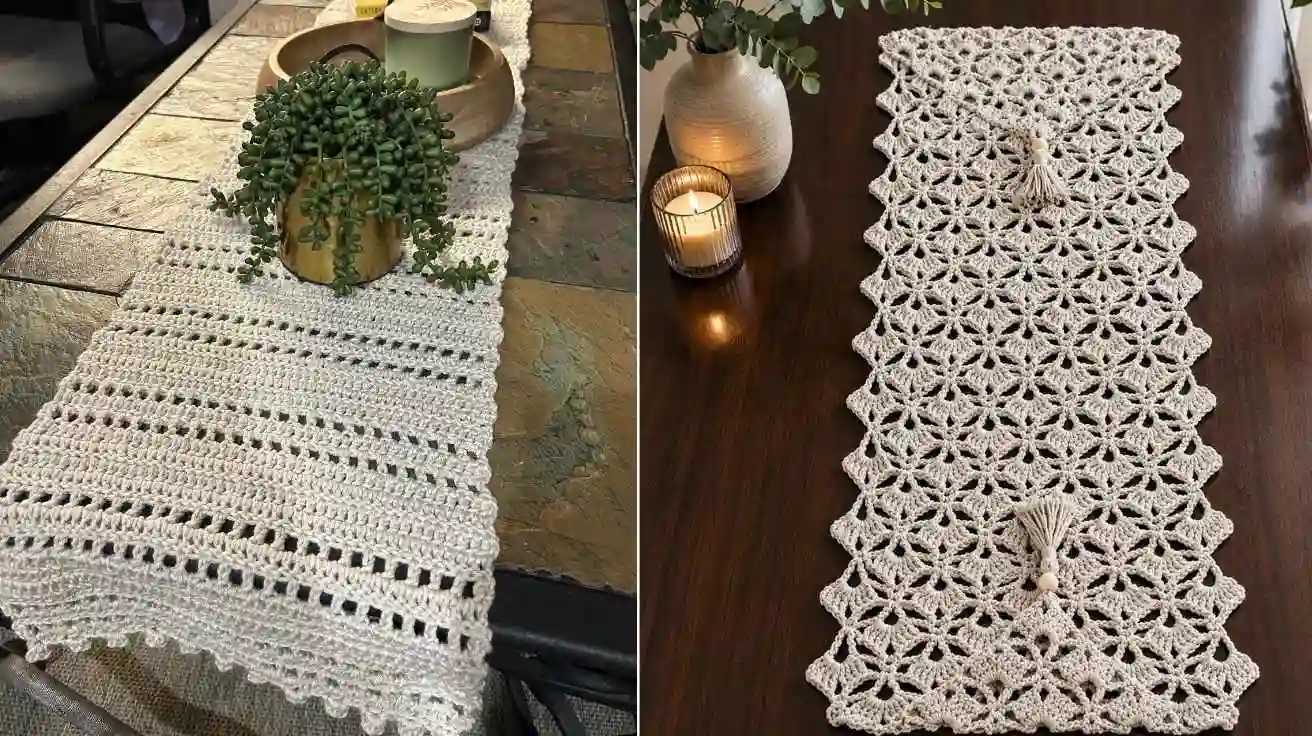
How to Make a Crochet Lace Table Runner: A Beautiful Step-by-Step Guide
A crochet lace table runner is one of those handmade projects that can instantly make an ordinary dining table feel warm, elegant, and inviting. With delicate stitches, openwork patterns, and a pretty decorative border, a handmade crochet table runner can become a beautiful centerpiece for everyday meals, dinner parties, holidays, or special occasions.
The best part is that you don’t need to be an expert crocheter to make one. Once you understand the basic crochet stitches and learn how to repeat a simple lace pattern, you can create a beautiful crochet lace table runner in the size and color that works best for your home.
In this guide, I’ll show you how to make a crochet lace table runner step by step, including the materials you need, how to choose your yarn and hook, how to create the lace pattern, how to add a decorative border, and how to finish and care for your handmade piece.
What Is a Crochet Lace Table Runner?
A crochet lace table runner is a long, narrow decorative piece made with crochet thread or yarn. It is usually placed along the center of a dining table, coffee table, console table, or sideboard.
Unlike a solid crochet table runner, a lace crochet table runner uses open spaces and decorative stitches to create a light, delicate appearance. Depending on the pattern, you can make the design look vintage, farmhouse, romantic, modern, rustic, or elegant.
Crochet lace is particularly beautiful because light can pass through the openwork stitches, allowing the surface of the table to remain partially visible underneath.
You can also customize your crochet table runner by changing the:
- Yarn color
- Yarn thickness
- Crochet hook size
- Runner length
- Runner width
- Lace stitch pattern
- Border design
- Overall shape
This makes a handmade crochet lace table runner a wonderful project for both beginners and experienced crocheters.
Why Make a Crochet Lace Table Runner?
There are plenty of reasons to make your own crochet table runner instead of purchasing a ready-made one.
First, handmade crochet gives you complete control over the design. You can choose a color that matches your dining room, kitchen, or seasonal decorations.
A crochet lace table runner can also be surprisingly inexpensive. A few balls of cotton yarn or crochet thread and a suitable hook may be all you need.
Another advantage is that you can make the runner to exactly fit your table. If your table is unusually long or narrow, simply continue repeating the pattern until you reach the desired length.
Most importantly, handmade crochet pieces have personality. Every stitch represents time and creativity, which makes a finished crochet table runner feel much more special than a mass-produced decoration.
Materials Needed for a Crochet Lace Table Runner
Before starting your crochet lace table runner, gather all your supplies.
Cotton Yarn or Crochet Thread
Cotton is an excellent choice for a table runner because it is durable, washable, and holds its shape well.
For a delicate lace appearance, choose a lightweight cotton crochet thread. If you are a beginner, however, you may prefer a slightly thicker cotton yarn because it is easier to see and work with.
Popular color choices include:
- White
- Cream
- Beige
- Natural cotton
- Sage green
- Dusty pink
- Light blue
- Gray
- Mustard
- Terracotta
White and cream are especially popular for traditional crochet lace table runners because they create a classic, vintage appearance.
Crochet Hook
Choose your crochet hook according to the yarn manufacturer’s recommendation.
For lightweight cotton thread, a smaller hook may be appropriate. For medium-weight cotton yarn, you might use a hook around 3.5 mm to 5 mm.
Always make a small test swatch before beginning the complete crochet table runner.
Other Supplies
You will also need:
- Scissors
- Tapestry needle
- Measuring tape
- Stitch markers, if needed
- Blocking pins
- Blocking mat or clean towel
Choosing the Right Size
The size of your crochet lace table runner depends on your table.
For a standard dining table, a runner measuring approximately 12 to 16 inches wide can work beautifully. The length should generally be close to the length of the table, although you can allow the ends to hang over the edges if you prefer.
For example, you might make a runner approximately:
- 36 inches long × 12 inches wide
- 48 inches long × 14 inches wide
- 60 inches long × 14 inches wide
- 72 inches long × 16 inches wide
These measurements are only suggestions. Crochet makes it easy to customize the project.
If you want a runner with a dramatic drape, make it longer than the tabletop and allow several inches to hang over each end.
How to Make a Crochet Lace Table Runner
Now let’s get into the fun part: making the crochet lace table runner.
This project uses basic crochet techniques combined with chain spaces and openwork stitches to create a lightweight lace effect.
Step 1: Make a Foundation Chain
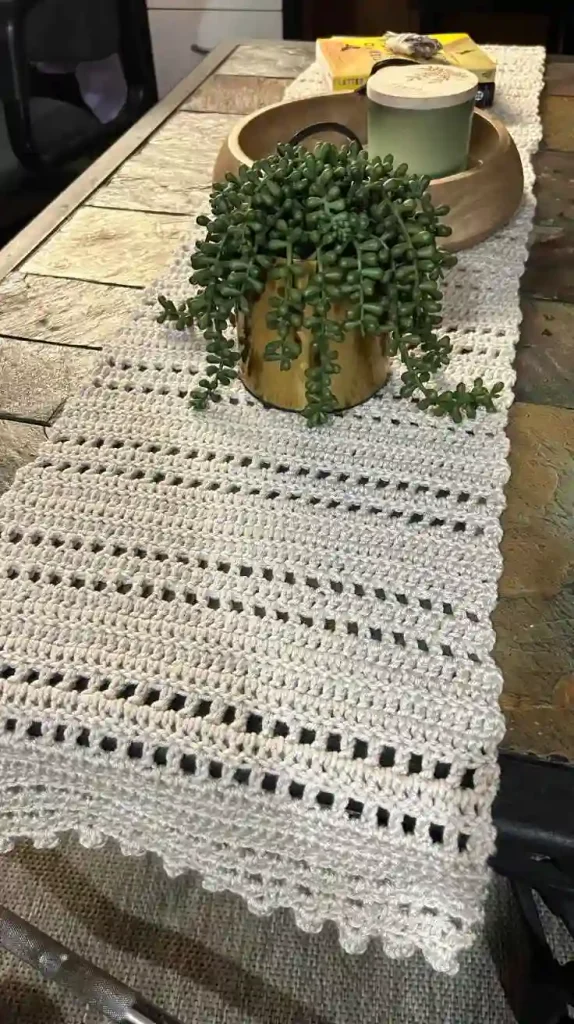
Start by creating a foundation chain.
The number of chains you make depends on the width you want and the stitch repeat of your selected pattern.
For a simple lace design, you might begin with a chain that is a multiple of a particular number plus a few additional chains for turning. Always check that your foundation chain fits the repeat of your chosen stitch pattern.
Try not to make your foundation chain too tight.
A tight foundation chain can cause the finished crochet table runner to curl or become narrower than expected.
If you naturally crochet tightly, consider using a slightly larger hook for the foundation chain.
Step 2: Begin the First Row
After making the foundation chain, begin working your first row.
Depending on your lace pattern, the first row might use single crochet, double crochet, or a combination of basic stitches and chain spaces.
For a beginner-friendly design, double crochet stitches are particularly useful because they create height quickly and provide attractive open spaces when combined with chains.
Work slowly during the first few rows.
The first rows establish the structure of your crochet lace table runner, so it is worth checking your stitch count regularly.
Step 3: Create the Lace Pattern
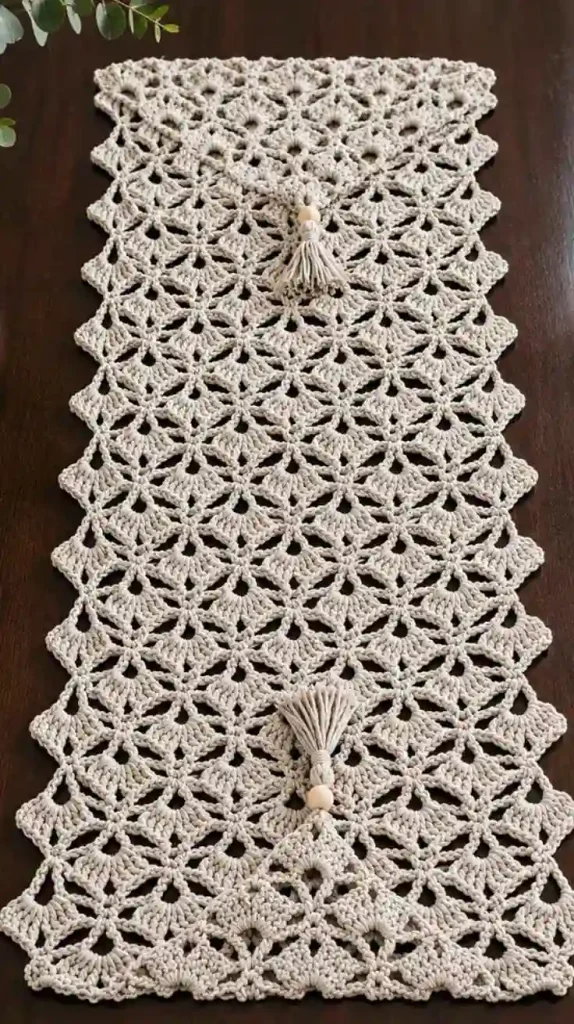
The beauty of a lace crochet table runner comes from its openwork pattern.
A simple lace effect can be created by alternating crochet stitches with chain spaces.
For example, you might work a sequence such as:
- Double crochet
- Chain space
- Skip a stitch
- Double crochet
- Chain space
- Repeat
The exact stitch combination can be changed depending on the pattern you want.
As you continue, the spaces between the stitches create the delicate lace appearance.
Don’t worry if the fabric looks loose or uneven at first. Crochet lace often looks much better after blocking.
Step 4: Repeat the Pattern
Once you understand the first few rows, simply repeat the lace pattern.
This is where crochet becomes relaxing. After learning the repeat, you don’t have to constantly think about every stitch.
However, count your stitches at the end of each row.
One missing or extra stitch can gradually change the shape of your table runner.
If you notice that the sides are becoming wider or narrower, stop and check your previous rows.
Step 5: Continue Until You Reach the Desired Length
Keep repeating the lace pattern until your crochet table runner reaches your desired length.
Don’t measure only while the project is stretched. Lace crochet can relax considerably after blocking.
Instead, occasionally lay the piece flat and measure it without pulling the fabric.
If you’re making a runner for a specific table, measure the table before finishing the project.
This prevents the frustrating situation of discovering that your handmade runner is too short or too long.
Creating a Decorative Crochet Border
A beautiful border can completely transform a simple crochet lace table runner.
Once you’ve finished the main body, work around the outer edges with a decorative crochet edging.
Simple Scalloped Border
A scalloped border is one of the easiest ways to create a feminine lace appearance.
You can make small groups of stitches around the edge to create rounded scallops.
The result looks delicate without being overly complicated.
Picot Border
A picot edging is another classic choice for crochet lace.
Small pointed loops are created along the edge, giving the table runner a traditional lace finish.
This style works particularly well with white or cream cotton.
Shell Border
For a more decorative finish, try a shell border.
Shells create small fan-shaped sections around the edge. They can make a simple crochet table runner look much more elaborate.
When adding a border, make sure you maintain an even tension around the corners.
How to Make the Corners Neat
Corners can sometimes be challenging when making a crochet table runner.
The key is to avoid crowding too many stitches into the corner.
Depending on the pattern, you may need to add additional chain spaces or stitches at each corner to help the fabric turn smoothly.
If the corner begins to curl, you may need more stitches.
If it becomes wavy, you may have added too many.
This is one reason making a small swatch before starting the full runner is useful.
Blocking Your Crochet Lace Table Runner
Blocking is one of the most important finishing steps.
It can make a huge difference to the appearance of crochet lace.
After completing your runner, gently wash it according to the yarn instructions. While it is damp, lay it flat on a blocking mat or clean towel.
Stretch the runner carefully into its intended shape.
Use blocking pins to secure the edges.
Pay special attention to the corners and lace openings.
Allow the crochet table runner to dry completely before removing the pins.
Blocking helps:
- Straighten uneven edges
- Open the lace pattern
- Improve stitch definition
- Create neat corners
- Give the runner a professional appearance
Don’t skip this step if you want your crochet lace table runner to look polished.
Crochet Lace Table Runner Color Ideas
Although white crochet lace is timeless, you don’t have to stick with traditional colors.
White Crochet Lace Runner
White creates a classic and elegant look.
It works especially well for weddings, formal dinners, and traditional dining rooms.
Cream Crochet Table Runner
Cream is slightly warmer than white and works beautifully with farmhouse and rustic decor.
Sage Green Crochet Runner
Sage green can give your table a soft, natural appearance. Pair it with wooden furniture, ceramic dishes, and neutral decorations.
Dusty Pink Crochet Runner
Dusty pink creates a romantic and feminine look without being too bright.
Natural Cotton
Natural cotton is perfect for a relaxed farmhouse or minimalist table setting.
How to Style a Crochet Lace Table Runner
Once your crochet lace table runner is complete, you can have fun decorating your table.
Place the runner down the center of the table and add a simple centerpiece.
You could use:
- A vase of fresh flowers
- Candles
- Wooden candle holders
- Small plants
- Ceramic bowls
- Seasonal decorations
- A fruit bowl
- Decorative lanterns
For a farmhouse look, combine a natural cotton crochet runner with wooden serving boards and simple ceramic dishes.
For an elegant setting, use a white lace runner with glass candle holders and fresh flowers.
The key is not to overcrowd the table. Let the lace pattern remain visible.
Common Mistakes When Making a Crochet Table Runner
Even experienced crocheters make mistakes. Here are some common problems to watch for.
Crocheting Too Tightly
Tight tension can make the lace look stiff instead of delicate.
Try relaxing your hands and maintaining consistent tension.
Losing Stitches
It is easy to accidentally skip a stitch at the beginning or end of a row.
Count your stitches regularly.
Choosing the Wrong Yarn
Very fuzzy yarn can hide the lace pattern.
For a crisp crochet lace table runner, cotton is usually a better choice.
Skipping Blocking
Your finished runner may look uneven immediately after crocheting.
Blocking can make a dramatic difference, particularly with lace patterns.
Not Checking the Measurements
Measure your table before starting and occasionally measure your project as you work.
How to Care for a Crochet Lace Table Runner
A handmade crochet table runner should be handled gently.
Always check the yarn label before washing.
Cotton crochet pieces can often be hand washed or machine washed on a gentle setting, but delicate crochet thread may require more careful treatment.
Avoid harsh detergents and excessive heat.
After washing, reshape the runner while damp and allow it to dry flat.
If necessary, block it again after washing.
Store the runner folded loosely in a dry place. Avoid placing heavy objects on top of it for long periods because this can permanently flatten delicate lace.
Can Beginners Make a Crochet Lace Table Runner?
Absolutely.
If you know how to make chain stitches, single crochet, double crochet, and slip stitches, you already have many of the skills needed to begin.
Start with a simple lace pattern rather than an extremely complicated vintage design.
Once you understand how chain spaces and basic stitches work together, you can gradually experiment with more decorative patterns.
The first few rows may feel slow, but the pattern becomes much easier once you recognize the repeat.
Crochet Lace Table Runner as a Handmade Gift
A crochet lace table runner also makes a thoughtful handmade gift.
You could make one for:
- Weddings
- Housewarmings
- Anniversaries
- Mother’s Day
- Christmas
- Birthdays
- New homeowners
- Holiday dinners
Choose the recipient’s favorite colors or match the runner to their home decor.