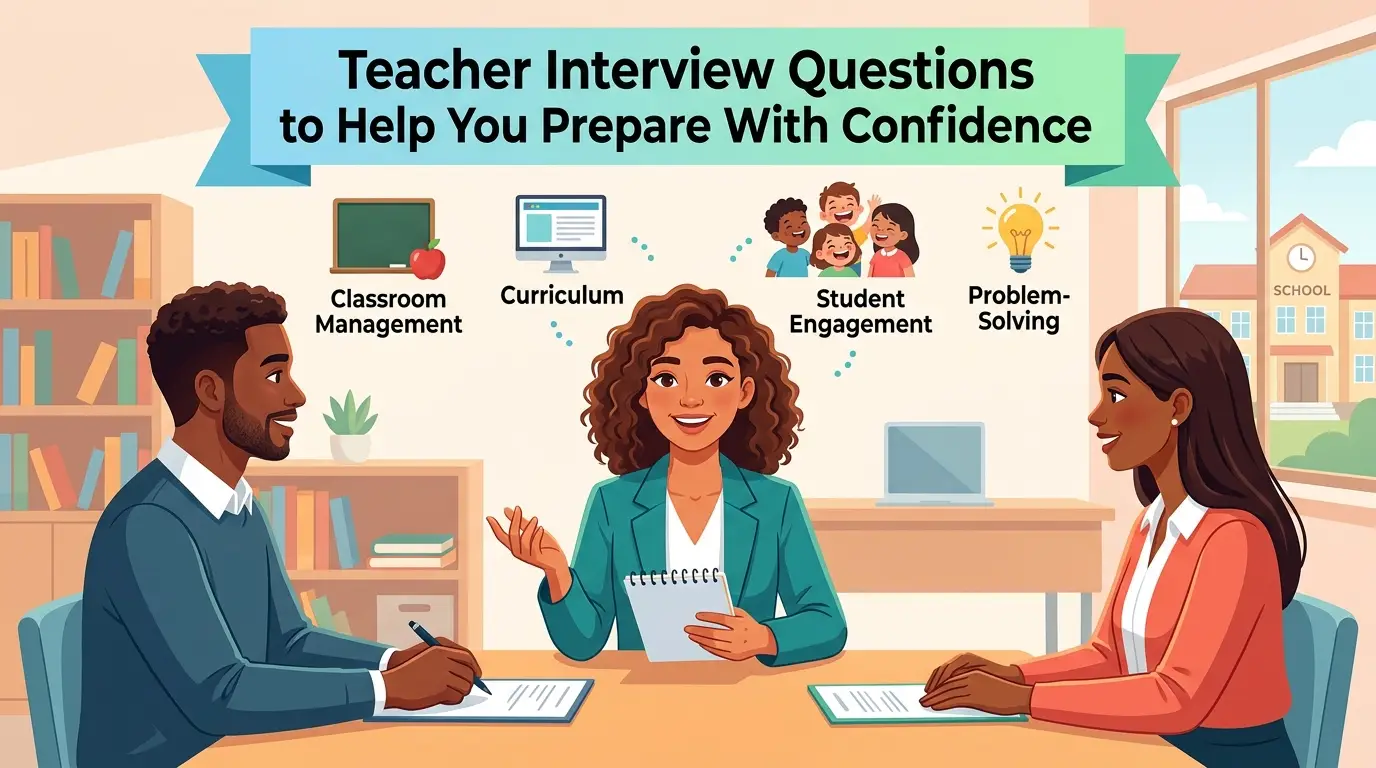
Teacher Interview Questions to Help You Prepare With Confidence
Landing a teaching position can be exciting, but the interview itself can feel like a major test. Whether you are a first-time teacher, an experienced educator, or someone moving into a new school or subject area, preparing for the right teacher interview questions can make a huge difference. A strong interview is not simply about giving the “correct” answer. It is about showing your personality, teaching philosophy, classroom-management skills, communication style, flexibility, and genuine commitment to helping students succeed.
The best way to prepare for teacher interview questions is to think about real situations you have experienced and connect your answers to practical teaching strategies. Interviewers want to see how you think, how you solve problems, and how you would respond when things do not go according to plan.
Below, you will find a comprehensive collection of 159 teacher interview questions covering common questions, classroom management, lesson planning, student engagement, technology, diversity, assessment, parent communication, special education, behavioral challenges, and professional development.
Common Teacher Interview Questions
“What inspired you to become a teacher?”
“What do you enjoy most about teaching?”
“Why do you want to work at our school?”
“What do you believe makes an effective teacher?”
“How would you describe your teaching philosophy?”
“What are your greatest strengths as a teacher?”
“What is one area of teaching you are currently working to improve?”
“How do you build positive relationships with your students?”
“What makes you different from other teaching candidates?”
“How would you describe your classroom environment?”
“What do you believe students need most from their teachers?”
“How do you define success as a teacher?”
“What motivates you to continue working in education?”
“Where do you see yourself professionally in the next few years?”
“What age group or grade level do you most enjoy teaching?”
Teacher Interview Questions About Classroom Management
Classroom management is one of the most important areas covered during a teaching interview. Schools want educators who can create an organized, respectful, and productive learning environment without relying entirely on punishment.
“How do you establish classroom rules and expectations?”
“What would you do if a student repeatedly disrupted your class?”
“How do you handle challenging student behavior?”
“How do you prevent discipline problems before they begin?”
“What classroom-management strategies have worked best for you?”
“How would you respond if two students started arguing during a lesson?”
“What would you do if a student refused to follow your instructions?”
“How do you balance being friendly with maintaining authority?”
“How do you encourage students to take responsibility for their behavior?”
“How would you handle a student who constantly talks while you are teaching?”
“What would you do if your classroom became unusually noisy?”
“How do you create a respectful classroom culture?”
“How would you respond to bullying in your classroom?”
“How do you deal with repeated lateness or incomplete assignments?”
“What would you do if your usual classroom-management strategy stopped working?”
Teacher Interview Questions About Lesson Planning
Effective teachers understand that preparation matters. Interviewers often ask lesson-planning questions to determine whether you can create meaningful learning experiences while adapting to different student needs.
“How do you plan a typical lesson?”
“What steps do you follow when creating a lesson plan?”
“How do you determine your lesson objectives?”
“How do you make sure your lessons align with curriculum standards?”
“How do you introduce a new topic to students?”
“How do you decide which teaching methods to use?”
“How do you plan lessons for students with different ability levels?”
“What do you do when a lesson does not go as planned?”
“How do you incorporate real-world examples into your lessons?”
“How do you make difficult concepts easier for students to understand?”
“How much time do you typically spend preparing a lesson?”
“How do you decide whether students are ready to move to the next topic?”
“What makes a lesson engaging and memorable?”
“How do you incorporate student interests into lesson planning?”
“How do you modify a lesson when students are struggling with the material?”
Teacher Interview Questions About Student Engagement
Student engagement can transform an ordinary classroom into a lively learning environment. Schools want teachers who can capture attention, encourage participation, and make students feel that learning has a purpose.
“How do you keep students engaged during a lesson?”
“What do you do when students appear bored or distracted?”
“How do you encourage quiet students to participate?”
“How do you motivate students who have little interest in the subject?”
“What activities do you use to make learning more interactive?”
“How do you encourage students to ask questions?”
“How do you make lessons relevant to students’ everyday lives?”
“How do you use group work effectively?”
“How do you encourage students to become independent learners?”
“What strategies do you use to maintain attention during longer lessons?”
“How do you make learning enjoyable without losing academic focus?”
“How do you encourage students to take ownership of their learning?”
“How do you support students who are afraid of making mistakes?”
“What would you do if only a few students participated in class discussions?”
“How do you measure student engagement?”
Teacher Interview Questions About Assessment
Assessment helps teachers understand what students know, where they are struggling, and what needs to happen next. Be prepared to explain how you use assessment as part of instruction rather than simply as a way to assign grades.
“How do you assess student learning?”
“What types of assessments do you use in your classroom?”
“How do you use formative assessment?”
“How do you use assessment results to improve your teaching?”
“What would you do if most students failed an assessment?”
“How do you provide meaningful feedback to students?”
“How do you make assessments fair and accessible?”
“How do you assess students who have different learning needs?”
“How do you balance tests with other forms of assessment?”
“How do you encourage students to learn from their mistakes?”
“How do you track student progress throughout the school year?”
“What role should student self-assessment play in the classroom?”
“How do you determine whether a student has mastered a skill?”
“How do you communicate assessment results to parents?”
“What would you change if your assessment results showed that students were not meeting learning objectives?”
Teacher Interview Questions About Differentiated Instruction
Every classroom contains students with different strengths, backgrounds, interests, and learning preferences. Strong candidates should demonstrate that they understand how to adjust instruction rather than expecting every student to learn in exactly the same way.
“How do you differentiate instruction for different learners?”
“How do you support students who are academically behind?”
“How do you challenge students who are academically advanced?”
“How do you adapt assignments for students with different abilities?”
“How do you identify individual student learning needs?”
“How do you use flexible grouping in your classroom?”
“What would you do if one student understood a concept much faster than the rest of the class?”
“How do you provide additional support without embarrassing a struggling student?”
“How do you make sure differentiation does not lower expectations?”
“How do you accommodate different learning preferences?”
“What strategies do you use to support students who need extra time?”
“How do you create an inclusive learning environment?”
“How do you support students who have difficulty concentrating?”
“What role does student choice play in differentiated instruction?”
“How do you determine whether your differentiation strategies are working?”
Teacher Interview Questions About Technology
Technology is now a regular part of many classrooms. Interviewers may want to know whether you can use digital tools purposefully rather than simply adding technology for the sake of it.
“How do you use technology to support learning?”
“What educational technology tools have you used?”
“How do you use interactive technology in your classroom?”
“How do you make sure technology improves learning rather than distracting students?”
“How would you teach students who have limited access to technology at home?”
“How do you teach students about responsible technology use?”
“How do you use digital resources when planning lessons?”
“How would you handle a technology failure during an important lesson?”
“How do you evaluate whether an educational app or digital resource is useful?”
“How can technology help students collaborate?”
Teacher Interview Questions About Parents and Families
Positive communication with families can strengthen student success. Schools value teachers who can communicate clearly, professionally, and respectfully even when conversations become difficult.
“How do you build positive relationships with parents?”
“How do you communicate student progress with families?”
“How would you handle an angry parent?”
“What would you do if a parent disagreed with your teaching approach?”
“How often should teachers communicate with parents?”
“How do you discuss a student’s behavioral concerns with a parent?”
“How would you respond if a parent demanded a higher grade for their child?”
“How do you involve families in the learning process?”
“How do you communicate with parents who rarely respond?”
“How would you handle a parent who believes their child can do no wrong?”
“What information should be shared during a parent-teacher conference?”
“How do you maintain professionalism during difficult conversations?”
“How do you celebrate student achievements with families?”
“How do you respect family differences and perspectives?”
“What would you do if a parent complained about another student?”
Teacher Interview Questions About Diversity and Inclusion
Today’s classrooms include students from many backgrounds and life experiences. Teachers need to create spaces where every student feels respected, represented, and capable of succeeding.
“How do you create an inclusive classroom?”
“How do you respect cultural differences among students?”
“How do you ensure that classroom materials represent diverse perspectives?”
“How would you respond if a student made an insensitive comment about another student’s background?”
“How do you create equal opportunities for all students?”
“How do you avoid unconscious bias in the classroom?”
“How do you support students who feel excluded?”
“How do you incorporate different cultures into your lessons?”
“How do you encourage students to appreciate differences?”
“What does equity mean to you as an educator?”
“How do you make sure every student feels heard?”
“What would you do if a classroom activity unintentionally excluded a student?”
“How do you create a safe environment for respectful discussions?”
“How do you handle disagreements between students from different backgrounds?”
“How can teachers help students develop empathy?”
Teacher Interview Questions About Special Education
Teachers frequently work with students who require individualized accommodations or additional support. Showing that you understand collaboration, patience, and individualized instruction can strengthen your interview answers.
“How do you support students with special educational needs?”
“How do you work with special education teachers?”
“How do you adapt instruction for students with learning difficulties?”
“How do you follow an individualized education plan?”
“How do you communicate with families about additional learning needs?”
“How do you make accommodations without making students feel different?”
“What would you do if a student needed more support than you could provide alone?”
“How do you collaborate with school specialists?”
“How do you monitor the progress of students receiving additional support?”
“How do you create accessible classroom activities?”
Teacher Interview Questions About Difficult Situations
Behavioral interview questions often begin with phrases such as “Tell me about a time…” These questions give interviewers an opportunity to see how you respond to real challenges.
“Tell me about a time you handled a difficult student.”
“Tell me about a lesson that failed and what you learned from it.”
“Describe a time you had to change your teaching approach.”
“Tell me about a time you successfully motivated a struggling student.”
“Describe a difficult conversation you had with a parent.”
“Tell me about a time you worked with a challenging colleague.”
“Describe a situation where you had to solve a classroom problem quickly.”
“Tell me about a time you received critical feedback.”
“Describe a teaching mistake you made and how you corrected it.”
“Tell me about a time you went beyond your normal responsibilities to help a student.”
“Describe a situation where you had to manage several responsibilities at once.”
“Tell me about a time you disagreed with another educator.”
“Describe a time when you successfully helped students overcome an obstacle.”
“Tell me about a time you used creativity to solve a teaching problem.”
“Describe a time when student feedback changed the way you taught.”
Teacher Interview Questions About Professional Development
Great teachers continue learning. Professional development questions help schools determine whether candidates are open to feedback, new ideas, and ongoing growth.
“How do you continue developing as a teacher?”
“What professional development opportunities have been most valuable to you?”
“How do you stay current with educational research?”
“How do you respond to constructive criticism?”
“What teaching skill would you most like to improve?”
“How do you learn about new teaching strategies?”
“How do you share successful teaching practices with colleagues?”
“How do you collaborate with other teachers?”
“What educational trend do you believe will influence teaching in the future?”
“How do you reflect on your teaching performance?”
Teacher Interview Questions About Teamwork
Teaching rarely happens in isolation. Educators collaborate with administrators, teachers, counselors, specialists, families, and support staff.
“How do you work as part of a teaching team?”
“How do you handle disagreements with colleagues?”
“What makes an effective professional relationship between teachers?”
“How do you contribute during team meetings?”
“How do you share resources with other teachers?”
“How would you support a new teacher at your school?”
“How do you respond when a colleague asks for help?”
“How do you maintain positive relationships with school administrators?”
“How do you collaborate when planning interdisciplinary lessons?”
“What qualities do you value most in a teaching team?”
Final Teacher Interview Questions to Practice
These final teacher interview questions can help you prepare for broader questions that may appear toward the end of an interview. They are also useful for practicing concise answers that reveal your personality and professional values.
“What would your previous students say about you?”
“What would your previous colleagues say about your teaching style?”
“What is your biggest accomplishment as a teacher?”
“What has teaching taught you about yourself?”
“What do you believe is the biggest challenge facing teachers today?”
“What is the most rewarding part of being an educator?”
“What is the most difficult part of teaching?”
“How do you maintain your enthusiasm during a challenging school year?”
“What would you do during your first month at our school?”
“What would you like to accomplish during your first year here?”
“Why should we hire you as a teacher?”
“What would you do if you disagreed with a school policy?”
“How do you handle stress and pressure?”
“What questions do you have for us?”
How to Answer Teacher Interview Questions Effectively
Preparing teacher interview questions is only half the process. Your delivery matters just as much. Try to answer naturally instead of memorizing long speeches word for word. Interviewers can usually tell when an answer sounds rehearsed.
For experience-based questions, use a simple structure: explain the situation, describe what you needed to accomplish, explain the action you took, and finish with the result. This approach keeps your response organized while giving the interviewer evidence of your skills.
Whenever possible, include specific examples. Instead of saying that you are “good at classroom management,” describe a situation where you established expectations, responded to a behavioral challenge, and improved the classroom environment.
It is also important to connect your answers to student outcomes. Teaching is ultimately about learning, growth, confidence, and opportunity. Explain how your decisions helped students understand a concept, become more independent, participate more confidently, or overcome a challenge.
Tips for Preparing for Teacher Interview Questions
Before your interview, research the school’s mission, values, curriculum, community, and educational approach. This allows you to make your answers more relevant and demonstrates genuine interest in the position.
Practice answering common teacher interview questions aloud. You do not need to memorize every response. Instead, prepare several flexible stories that demonstrate classroom management, teamwork, problem-solving, differentiation, communication, leadership, and student success.
Prepare questions to ask the interview panel as well. Asking thoughtful questions shows that you are evaluating whether the school is a good professional fit rather than simply hoping to receive an offer.
Finally, remember that confidence does not mean pretending to know everything. If you encounter a question you cannot answer immediately, take a moment to think. Explain how you would investigate the issue, seek support, collaborate with colleagues, and make a thoughtful decision.
Conclusion
Preparing for 159 Teacher Interview Questions can help you walk into your next interview with greater confidence and a clearer understanding of what schools are looking for. From classroom management and lesson planning to student engagement, assessment, technology, diversity, parent communication, and professional development, these questions cover many of the areas that can shape a successful teaching career.
The strongest interview answers are specific, honest, student-focused, and supported by real examples. Rather than trying to sound perfect, show that you are reflective, adaptable, compassionate, organized, and committed to helping students learn.
A great teacher interview is not just an opportunity to prove that you can teach. It is your chance to show the school the kind of educator, colleague, mentor, and role model you can become.