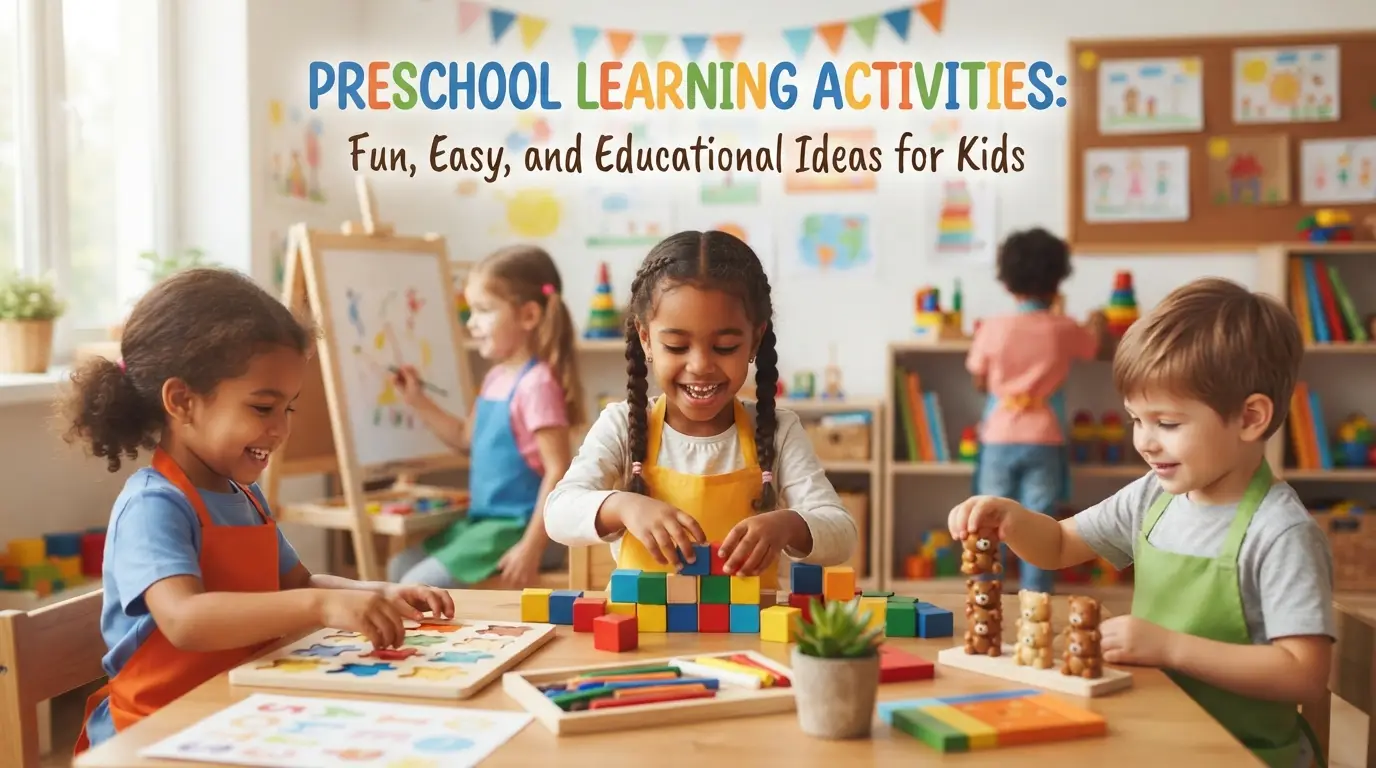
Preschool Learning Activities: Fun, Easy, and Educational Ideas for Kids
Preschool is an exciting stage of childhood when little learners begin exploring the world around them. Children learn best when they can touch, move, create, ask questions, and experiment with new ideas. That is why preschool learning activities are such an important part of early childhood education. Whether you are a preschool teacher, daycare provider, or parent looking for fun activities at home, the right learning experiences can help children develop essential skills while enjoying every moment.
These preschool learning activities encourage creativity, early literacy, counting, problem-solving, social interaction, and physical development. From colorful art projects to simple science experiments, there are plenty of ways to make learning enjoyable without expensive supplies or complicated preparation.
The best part is that most preschool learning activities can be adapted to different ages and abilities. You can use everyday household items, outdoor spaces, toys, books, and craft materials to create meaningful learning opportunities. The goal is not to make preschool feel like formal schoolwork but to help children discover new skills through playful experiences.
Fun Preschool Learning Activities for Early Literacy
Early literacy activities help preschoolers recognize letters, develop listening skills, understand stories, and become familiar with written language. These experiences prepare children for reading and writing while making language learning enjoyable.
Alphabet Treasure Hunt
Hide alphabet cards around a classroom or living room and invite children to find them. As each card is discovered, encourage the child to name the letter and think of a word that begins with it. This preschool learning activity combines movement, observation, and letter recognition in an exciting game.
Letter Matching Game
Write uppercase and lowercase letters on separate cards. Ask children to match the pairs by placing the cards together. Start with a few familiar letters before introducing the entire alphabet. This activity helps preschoolers recognize different letter forms and develop early reading readiness.
Storytime With Puppets
Read a short picture book and use puppets to bring the characters to life. Invite children to make the characters speak, repeat familiar phrases, or describe what might happen next. Storytime with puppets encourages listening, imagination, vocabulary development, and confidence in speaking.
Name Recognition Practice
Write each child’s name on a piece of paper and provide letter cards for them to arrange in the correct order. Children can decorate their names with stickers or crayons after completing the activity. Recognizing their own names gives preschoolers a meaningful introduction to letters and print.
Rhyming Word Game
Say a simple word such as cat, sun, or dog and ask children to suggest words that sound similar. You can use picture cards to make the game easier for beginners. Rhyming activities help children notice sound patterns, which is an important foundation for developing phonological awareness.
Picture Book Retelling
After reading a favorite story, ask children to explain what happened at the beginning, middle, and end. They can use drawings, toys, or picture cards to help tell the story. This activity strengthens memory, comprehension, sequencing, and communication skills.
Letter Tracing With Sand
Pour a thin layer of clean sand into a shallow tray and demonstrate how to trace letters with a finger. Children can practice simple shapes before moving on to familiar letters. The textured surface provides a hands-on way to explore early writing while developing fine motor control.
Sound Detective Game
Choose a familiar sound, such as the first sound in the word ball, and ask children to identify other objects that begin similarly. Use toys and household items to provide visual clues. This preschool learning activity builds listening awareness and helps children connect spoken sounds with words.
Story Creation With Pictures
Give children several picture cards featuring animals, people, places, and objects. Ask them to select a few cards and invent a story that connects the pictures. There are no wrong answers because the purpose is to encourage imagination, vocabulary, and creative expression.
Playdough Letter Making
Provide soft playdough and encourage children to roll it into long shapes that form letters. Begin with straight lines and simple curves before introducing more challenging letters. This activity combines early literacy with sensory exploration and strengthens the small muscles needed for writing.
Preschool Math Activities for Counting and Numbers
Preschool math activities introduce basic mathematical concepts through everyday experiences. Counting toys, sorting objects, recognizing patterns, and comparing sizes help children understand numbers in practical ways.
Counting Toy Animals
Place several toy animals on a table and ask children to count them aloud. Invite them to move each animal into a separate group as they count. This makes counting more concrete and helps preschoolers understand that numbers represent quantities.
Number Matching Cards
Create cards featuring written numbers and matching cards with dots representing the same quantities. Children can pair the number three with a card containing three dots, for example. This activity helps connect number symbols with the amounts they represent.
Colorful Shape Sorting
Provide blocks or paper shapes in different colors and forms. Ask children to group all the circles together, find the triangles, or separate objects by color. Shape sorting develops visual discrimination, classification, and early mathematical reasoning.
Counting Snack Pieces
During snack preparation, invite children to count a few pieces of an age-appropriate snack onto their plates. Ask questions such as how many pieces they have or whether they need one more. Follow allergy guidance and supervise eating, especially when working with foods that may present choking risks.
Pattern Building With Blocks
Create a simple pattern using two colors of blocks, such as red, blue, red, blue. Encourage children to continue the sequence and then create their own patterns. This activity introduces repetition, prediction, and logical thinking.
Shape Hunt Around the Classroom
Ask preschoolers to find objects shaped like circles, squares, rectangles, or triangles. A clock might represent a circle, while a book may resemble a rectangle. Connecting shapes with real objects helps children recognize geometry in their everyday environment.
Measuring With Building Blocks
Invite children to measure toys, books, or other safe classroom objects using blocks as informal measuring units. Ask which object is longer or shorter. This playful experience introduces measurement and comparison without requiring standard measuring tools.
Number Hopscotch
Draw large numbers on the ground with washable chalk and call out a number for children to find. They can hop, step, or walk toward the correct number depending on their abilities. This activity combines number recognition with gross motor movement.
Sorting Buttons by Size
Provide large, age-appropriate sorting objects and ask children to group them by size or color. If using buttons, ensure they are too large to swallow and supervise closely. Larger alternatives, such as chunky counters, can provide a safer option for younger preschoolers.
Simple Addition With Toys
Place two toy cars in one group and one car in another. Ask children to bring the groups together and count the total. This introduces the idea of addition through objects they can move and manipulate themselves.
Creative Art and Craft Preschool Learning Activities
Art and craft activities give preschoolers opportunities to explore colors, textures, shapes, and different ways of expressing ideas. They also encourage independence, imagination, and fine motor development.
Finger Painting
Set out washable, child-safe paint and large sheets of paper. Invite children to create pictures using their fingertips, palms, or simple hand movements. Finger painting introduces color mixing and sensory exploration while allowing children to express themselves freely.
Paper Plate Animals
Provide paper plates, crayons, glue, and pre-cut paper shapes to help children create animal faces. They might make a lion, rabbit, fish, or favorite pet. This activity encourages creativity and helps children practice identifying animal features.
Leaf Printing
Collect clean leaves from the ground and place them beneath sheets of paper. Children can rub crayons over the paper to reveal the leaf shapes or use washable paint to print their textures. This activity connects art with nature and observation.
Color Mixing Experiment
Give children small amounts of two primary colors of washable paint and let them mix the colors together. Ask them to predict what will happen before combining the paints. This simple activity introduces color relationships and encourages curiosity.
Collage Making
Offer paper scraps, fabric pieces, large stickers, and other safe craft materials. Invite children to arrange the materials into a picture of their choice. Collage making supports creative thinking, material exploration, and decision-making.
Shape Stamping
Use child-safe sponge stamps or large foam shapes dipped in washable paint. Children can press the shapes onto paper to create patterns and pictures. Encourage them to identify the shapes and describe the colors they have used.
Homemade Greeting Cards
Help preschoolers make greeting cards for family members, classmates, or teachers. They can draw pictures, add stickers, and dictate a short message for an adult to write. This activity combines creativity with early communication and kindness.
Recycled Box Building
Collect clean cardboard boxes and invite children to transform them into houses, cars, shops, or imaginary castles. Provide washable crayons and child-safe decorating materials. Recycled box building encourages imaginative play and helps children explore basic construction concepts.
Sponge Painting
Cut clean sponges into large, easy-to-hold shapes and provide washable paint. Children can dab, press, and drag the sponges across paper to create different patterns. This activity develops hand control and allows children to experiment with texture.
Self-Portrait Drawing
Give each child a mirror and paper, then encourage them to draw their face. Ask about their eyes, hair, and other features without expecting realistic results. Self-portrait drawing supports body awareness, observation, and personal expression.
Preschool Science Activities for Curious Young Minds
Science activities introduce preschoolers to observation, experimentation, and cause-and-effect relationships. Children do not need complicated equipment to begin exploring scientific ideas. Everyday materials can offer plenty of opportunities to ask questions and discover answers.
Sink or Float Experiment
Fill a container with water and gather a selection of safe, large objects. Ask children to predict which objects will sink and which will float before testing them. Discuss what happened and encourage children to explain their observations in their own words.
Growing a Bean Plant
Place a bean seed inside a clear container lined with damp paper towel. Keep the paper towel moist and observe the seed over several days. Children can draw pictures of the changes they notice, learning about plant growth and the importance of water.
Weather Observation Chart
Invite children to look outside each morning and describe the weather. They can record whether the sky is sunny, cloudy, rainy, or windy using drawings or picture cards. This activity develops observation skills and introduces simple data collection.
Ice Melting Experiment
Place an ice cube on a tray and ask children to observe it as it melts. Discuss how the ice changes from solid to liquid. You can compare ice in a shaded place with ice in a warmer location while keeping the activity supervised.
Nature Collection and Sorting
Take children on a supervised outdoor walk to collect fallen leaves, large seed pods, and other safe natural objects. Back indoors, invite them to sort their findings by shape, texture, or color. This activity encourages scientific observation and environmental awareness.
Shadow Exploration
On a sunny day, help children observe the shadows made by their bodies or outdoor objects. Move slightly and notice how the shadows change. This activity introduces light and shadow through direct experience.
Color Discovery With Water
Prepare separate clear containers of water colored with small amounts of child-safe food coloring. Allow children to combine small quantities under adult supervision and observe the new colors. Use containers that cannot easily tip over and keep colored water away from mouths and eyes.
Magnet Discovery
Provide large, age-appropriate magnets and safe objects made from different materials. Ask children to predict which objects will be attracted to the magnets. Avoid small magnetic pieces and powerful magnets, which can be dangerous if swallowed.
Watching Clouds
Sit outside together and observe the clouds moving across the sky. Ask children what shapes they notice and how the clouds appear to change. This activity encourages imagination while helping children practice careful observation.
Nature Sound Listening
Spend a few quiet minutes listening for birds, leaves rustling, wind, or distant traffic. Ask children to describe the sounds they hear. Nature sound listening develops attention, vocabulary, and awareness of the surrounding environment.
Fine Motor Preschool Learning Activities
Fine motor skills involve the small muscles of the hands and fingers. Developing these skills helps children become more comfortable with drawing, handling objects, dressing themselves, and eventually writing.
Pom-Pom Transfer
Place large craft pom-poms in one container and provide a child-safe scoop or large tongs. Invite children to transfer the pom-poms into another container. This activity supports hand-eye coordination and controlled hand movements. Supervise carefully and choose materials appropriate for the child’s age.
Sticker Pattern Making
Give children large stickers and paper featuring simple shapes or lines. Encourage them to place stickers along a path or create a repeating pattern. Peeling and placing stickers strengthens finger control and supports early mathematical thinking.
Playdough Shape Pressing
Provide soft playdough and large cookie cutters designed for supervised children’s activities. Children can press the cutters into the dough to make stars, circles, or other shapes. This activity strengthens hands while reinforcing shape recognition.
Large Bead Threading
Offer large beads and a thick lace designed for preschool use. Show children how to thread each bead onto the lace and remove it afterward. Choose materials that cannot be swallowed and supervise continuously, particularly with younger children.
Water Painting
Give children a paintbrush and a small container of water so they can paint on a chalkboard, pavement, or suitable outdoor surface. They can draw lines, circles, and simple pictures without creating a permanent mess. This activity practices controlled hand movements.
Paper Tearing Art
Provide soft paper in different colors and invite children to tear it into pieces for a collage. Tearing paper strengthens the hands and encourages children to explore size, texture, and shape.
Clothespin Color Matching
Use large, child-safe clips and colored cards. Ask children to attach the matching clip to each card. Select clips that are easy to squeeze and supervise their use to avoid pinched fingers.
Threading Pasta Shapes
For children who are developmentally ready, provide large pasta tubes and a thick cord to make a simple pattern. An adult should supervise throughout because pasta and cords can present choking or entanglement risks. Large reusable threading shapes are a safer alternative for younger children.
Drawing With Different Tools
Offer chunky crayons, washable markers, and thick chalk. Invite children to make straight lines, circles, zigzags, and free-form pictures. Different tools provide varied sensory experiences and help children discover which movements they can control.
Practical Dressing Practice
Provide a dressing frame, large fabric pieces with easy fasteners, or a doll with simple clothing. Encourage children to practice opening and closing large zippers, fastening big buttons, or pulling on garments. This activity supports independence and coordination.
Gross Motor Preschool Activities for Active Learners
Gross motor activities help children strengthen their larger muscles, develop balance, and improve coordination. Active play is also an excellent way to help preschoolers release energy while learning to follow instructions and interact with others.
Indoor Obstacle Course
Arrange cushions, floor markers, and low, stable obstacles in a spacious area. Children can step over soft objects, walk around markers, or crawl through a large play tunnel. Keep the course age-appropriate and clear of sharp edges or unstable furniture.
Animal Movement Game
Call out an animal and invite children to imitate its movements. They might hop like a rabbit, stretch like a cat, or walk slowly like a bear. This activity combines physical exercise with imagination and animal recognition.
Freeze Dance
Play cheerful, age-appropriate music and invite children to dance freely. Pause the music occasionally and ask everyone to freeze in place. Freeze dance improves listening, balance, body awareness, and self-regulation.
Beanbag Toss
Place a large basket on the floor and give children soft beanbags to toss from a short distance. Encourage them to aim carefully and take turns. This activity supports hand-eye coordination and introduces simple ideas about distance.
Follow the Leader
Take turns leading a group through safe movements such as marching, clapping, stretching, and walking on tiptoe. Children practice copying actions, listening carefully, and participating in a shared activity.
Balloon Tap Game
Use a lightweight balloon and encourage children to tap it gently into the air without letting it touch the ground. Keep the space clear and supervise the activity. Never use balloons with children who might put balloon pieces in their mouths.
Balance Path
Place flat floor markers or strips of nonslip material on the ground to create a simple path. Invite children to walk slowly along the route with their arms out for balance. Avoid raised surfaces and slippery materials.
Outdoor Nature Walk
Take children on a supervised walk and encourage them to notice trees, flowers, birds, and changes in the weather. Ask them to describe what they see and hear. Nature walks combine movement with vocabulary development and curiosity.
Ball Rolling Partners
Have children sit facing a partner and roll a soft ball back and forth. Encourage them to wait until their partner is ready before rolling. This activity develops coordination, turn-taking, and early social skills.
Action Song Time
Sing songs that include clapping, jumping, stretching, and marching. Children can follow the movements while learning new words and rhythms. Action songs are especially helpful for combining language development with physical activity.
Social and Emotional Preschool Learning Activities
Social and emotional learning helps preschoolers identify feelings, communicate needs, cooperate with others, and begin managing frustration. These skills are essential for building positive relationships and preparing for classroom routines.
Feelings Face Matching
Create cards showing different facial expressions, such as happiness, sadness, surprise, and frustration. Ask children to match the expressions with emotion words. Discussing feelings helps preschoolers build emotional vocabulary and recognize different experiences.
Kindness Circle
Invite children to share one kind thing they could do for someone else. Examples include sharing a toy, helping clean up, or inviting a classmate to play. The activity encourages empathy and helps children understand how small actions can make others feel valued.
Cooperative Building Challenge
Give a small group of children blocks and ask them to build something together. Encourage them to share materials, discuss ideas, and solve disagreements with adult guidance. Cooperative construction develops teamwork and communication.
Taking-Turns Board Game
Choose a simple game that involves rolling a large die, moving a piece, or matching pictures. Remind children to wait while others take their turns. This activity provides practical experience with patience, fairness, and following rules.
Feelings Storytime
Read a story in which a character experiences a strong emotion. Ask children how the character might feel and what could help. Keep the discussion open-ended so children can share ideas without feeling pressured to describe personal experiences.
Calm-Down Corner
Create a comfortable space with soft cushions, picture books, and simple breathing prompts. Teach children that they can use the space when they need a quiet moment. A calm-down corner helps preschoolers begin recognizing emotions and practicing self-regulation.
Pretend Grocery Store
Set up a pretend store with empty food containers, reusable shopping bags, and play money. Children can take turns being shoppers and cashiers. This activity encourages polite communication, imaginative play, cooperation, and practical vocabulary.
Compliment Circle
Invite children to share something positive about a classmate, such as being helpful or sharing materials. Offer examples if they need support and make participation optional. The activity encourages appreciation and creates opportunities for positive social interaction.
Puppet Problem-Solving
Use puppets to act out a simple disagreement about sharing a toy or choosing a game. Ask children what the characters could do to solve the problem. This gives preschoolers a playful way to practice communication and conflict resolution.
Classroom Helper Jobs
Give children simple responsibilities such as putting away books, arranging cushions, or helping distribute supplies. Rotate the jobs so everyone gets a chance to participate. Classroom helper activities build responsibility, independence, and a sense of belonging.
Practical Life Preschool Learning Activities
Practical life activities help preschoolers develop independence by practicing everyday routines. They can also introduce early math, vocabulary, sequencing, and problem-solving in familiar situations.
Toy Cleanup Sorting
Provide labeled bins or picture labels for different toy categories. Invite children to place blocks, books, dolls, and other materials in their proper locations. This activity builds classification skills while encouraging responsibility.
Washing Toy Dishes
Set up a supervised water station with plastic dishes, a small amount of water, and a soft sponge. Children can practice wiping and rinsing the dishes before placing them on a drying towel. Keep the water shallow and clean up spills promptly.
Matching Socks
Provide several pairs of clean socks and invite children to match the colors and patterns. Ask them to explain how they know which socks belong together. Matching socks develops visual discrimination and practical independence.
Simple Table Setting
Show children how to place napkins, unbreakable plates, and child-safe cups at a table. They can count the place settings and check whether each seat has the necessary items. This activity introduces routines, counting, and responsibility.
Watering Classroom Plants
Give children a small watering can and demonstrate how to water a plant without flooding the soil. Explain that plants need water, light, and suitable growing conditions. This practical task develops care, observation, and an understanding of living things.
Snack Preparation
With adult supervision, invite children to prepare simple snacks using safe, age-appropriate ingredients. They might arrange soft fruit pieces or spread a suitable topping with a child-safe utensil. Follow allergy guidance and cut foods appropriately to reduce choking risks.
Organizing Art Supplies
Ask children to place crayons, paper, paintbrushes, and other materials into labeled containers. You can introduce color sorting or count the items together. This activity teaches organization and helps children become more confident in managing their learning environment.
Folding Small Towels
Provide clean, small towels and demonstrate how to fold them in half or into quarters. Children can practice matching the edges and stacking the finished towels. This simple task develops coordination, sequencing, and independence.
Matching Everyday Objects
Gather safe household objects and picture cards showing the same items. Ask children to match a spoon with its picture, a cup with its image, or a toy car with its representation. This activity strengthens observation and vocabulary.
Following Picture Instructions
Create a sequence of pictures showing a simple task, such as choosing a book, sitting down, and returning the book afterward. Invite children to follow the pictures in order. Visual instructions support sequencing, comprehension, and independence.
Sensory Preschool Learning Activities
Sensory play allows children to explore different textures, sounds, movements, and materials. These experiences can encourage curiosity, language development, and problem-solving while giving preschoolers different ways to interact with their surroundings.
Sensory Rice Bin
Fill a sturdy container with dry rice and provide large scoops, cups, and funnels. Children can pour, scoop, and compare amounts while describing the sounds and textures. Use this activity only with children who no longer mouth small objects, and supervise closely to prevent ingestion.
Water Pouring Station
Set out shallow containers, small pitchers, and sturdy cups in a supervised play area. Children can pour water from one container to another and observe how the water moves. This activity encourages concentration, coordination, and early understanding of volume.
Texture Discovery Bags
Prepare securely sealed bags containing safe materials with different textures, such as soft fabric, smooth gel, or cotton. Invite children to press the bags and describe what they feel. Ensure the bags cannot leak or be opened, and supervise their use.
Sound Shaker Exploration
Use securely sealed, child-safe sound containers designed for preschool play. Encourage children to compare loud and quiet sounds, shake quickly or slowly, and follow simple rhythm patterns. Avoid containers that could break or release small contents.
Scent Recognition Game
Offer a few familiar, mild scents from a safe distance, such as a piece of orange peel or a fresh mint leaf. Invite children to describe the smells without requiring them to identify every one. Avoid essential oils and strong fragrances, and consider allergies or sensitivities.
Homemade Sensory Bottles
Fill sturdy, securely sealed sensory bottles with water, glitter alternatives, or large decorative materials that cannot escape. Children can slowly turn the bottles and observe how the contents move. Adults should prepare and inspect the bottles to ensure they remain sealed.
Soft and Rough Texture Sorting
Provide large pieces of safe materials, such as soft fleece, smooth cotton, and textured fabric. Ask children to group similar textures together and describe how each material feels. This activity builds descriptive vocabulary and encourages careful observation.
Nature Sensory Tray
Arrange large, safe natural items such as smooth stones, fallen leaves, and sturdy pieces of bark on a tray. Invite children to compare their textures and shapes. Avoid toxic plants, sharp objects, and small items that could be swallowed.
Bubble Observation
Blow bubbles outdoors and encourage children to watch how they float, pop, and change direction. Ask them to predict where a bubble might travel. This activity combines movement, observation, and playful scientific thinking.
Quiet Listening Station
Create a comfortable space where children can listen to gentle music, nature sounds, or a short audio story. Ask them to identify different sounds or describe how the music makes them feel. This activity supports attention, language, and sensory awareness.
Tips for Making Preschool Learning Activities More Effective
Preschool learning activities work best when they are enjoyable, flexible, and appropriate for children’s developmental stages. Young children have different interests, attention spans, and learning needs, so it is important to adjust each activity rather than expect everyone to complete it in exactly the same way.
Keep instructions short and demonstrate what you want children to do. Instead of explaining every step at once, show the first step and allow children to try it before moving forward. Demonstrations make activities easier to understand and give children an opportunity to learn through observation.
Use materials that are affordable and easy to find. Cardboard boxes, paper, crayons, blocks, reusable containers, and picture books can support a wide range of preschool learning activities. You do not need expensive educational toys to create meaningful learning experiences.
Encourage exploration instead of focusing only on the final result. If a child creates an unusual painting or builds a tower that looks different from your example, allow them to explain their idea. Open-ended play supports creativity, independence, and confidence.
Include a mixture of quiet and active activities throughout the day. Reading, drawing, and puzzles can be balanced with dancing, outdoor play, and movement games. This variety helps keep children interested while supporting different areas of development.
Pay attention to safety whenever you prepare an activity. Avoid small objects that can be swallowed, supervise water play, use age-appropriate art supplies, and provide clear boundaries for movement games. Consider allergies, sensory preferences, and individual developmental needs when selecting materials.
Most importantly, make learning a positive experience. Praise children’s effort, curiosity, patience, and willingness to try something new. Preschoolers do not need to master every skill immediately. They benefit from having time to experiment, ask questions, make mistakes, and try again.